Weird science stuff

A pale ginge friend tripped and grazed his face at a car show years back, after to many beers, then applied sunburn (because to many beers) end result was melanoma, this traveled to his tounge and throat. He's still around so far.
 
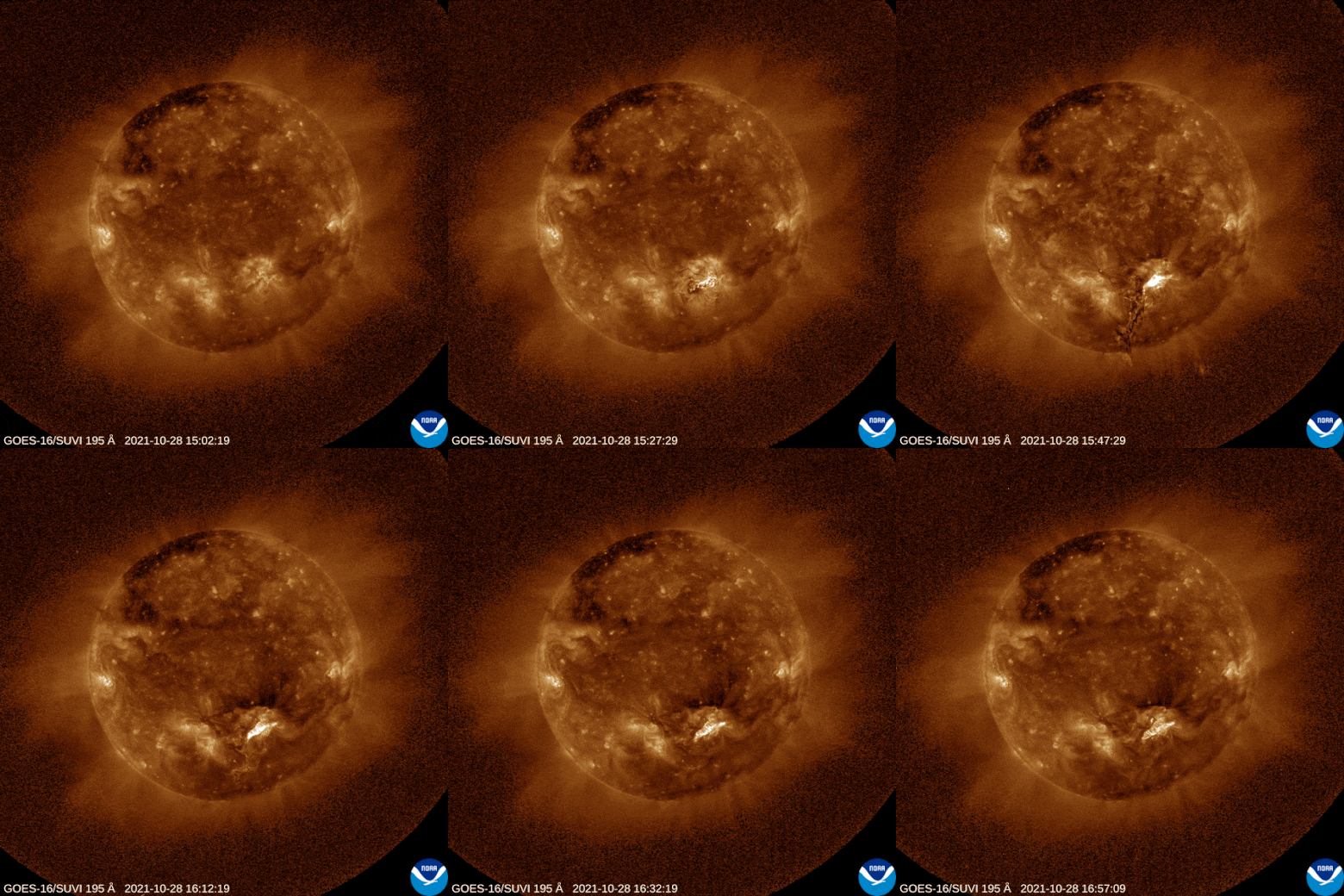
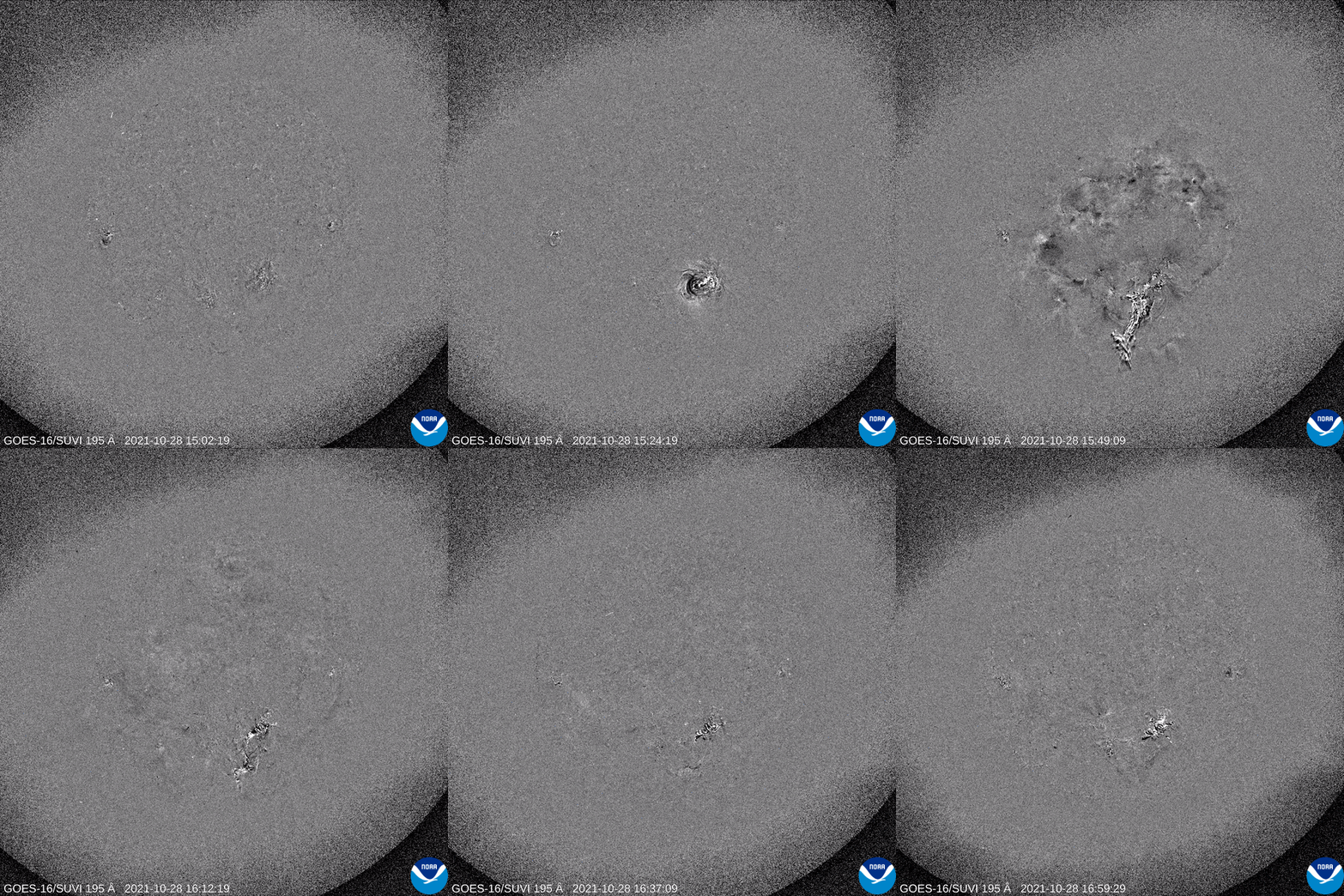
A MEGA-BUBBLE IN THE SUN'S ATMOSPHERE: Last week, NOAA released a list of space weather highlights so far from Solar Cycle 25. Visually, the most spectacular was an X1-class solar flare on Oct. 28, 2021, which blew a mega-bubble in the sun's atmosphere:

bubble_half_strip_opt.gif


link ---> See also a contrast enhanced movie of the explosion​
Oct_28_2021_close_up.gif


NOAA's GOES-16 satellite recorded the event using an extreme ultraviolet telescope called the Solar Ultraviolet Imager (SUVI). Compared to NASA's better-known Solar Dynamics Observatory, SUVI has a wider field of view which allows it to capture extremely large structures like this.

The expanding bubble pushed a CME out of the sun's atmosphere. At the time, space weather forecasters predicted it would hit Earth and trigger a strong geomagnetic storm. That's not what happened, though. The CME passed mostly south of our planet, delivering only a glancing blow. The resulting G1-class geomagnetic storm on Oct. 31, 2021, was a minor event with only a brief display auroras over Canada.

NOAA's list of highlights will grow longer in the years ahead. Solar Cycle 25 is still a relatively young cycle with maximum activity expected in 2024-2025. The next mega-bubble might have better aim. Stay tuned! Aurora alerts: SMS Text

 
While humans were in strict lockdown, wild mammals roamed further


were the animals really altering their behavior because human mobility had changed, or was it that people had more time to notice animals in these apparently unusual places?
 
While we humans have recently experienced pandemics, the animal kingdom has been experiencing a severe one, already driving a number of species to extinction.

 
Handheld bio printer could eventually help eliminate the need for donor organs.

”Prof. Akbari elaborates, "In situ bioprinting is suitable for repairing large defects caused by trauma, surgery, or cancer, which requires large-scale tissue constructs. In the long term, this technology can eliminate the need for organ donors, while also lowering the risks associated with transplantation, allowing patients to enjoy longer and healthier lives."”

Now every guy can make John Holmes look like a mere Shetland Pony.
 
Using ultrasound to release cancer treatments in a deep tissue target.
“To make the sonodynamic immunomodulation molecular system, the team prepared nanoparticles from a specific semiconducting polymer that responds to ultrasound. Activated by ultrasound waves, it transferred its energy to molecular oxygen, from which singlet oxygen (a type of reactive oxygen species) was formed in the cells to induce immunogenic cell death and kill cancer cells. In addition, the polymer—or "semiconducting pro-nanomodulator"—carried two specific immunomodulators into the cells, which were released by singlet-oxygen-induced bond breakage after ultrasound activation.”


440roadrunner, this is right up your alley. Can any of your equipment do this?

A NEW WAY TO DETECT SOLAR FLARES:
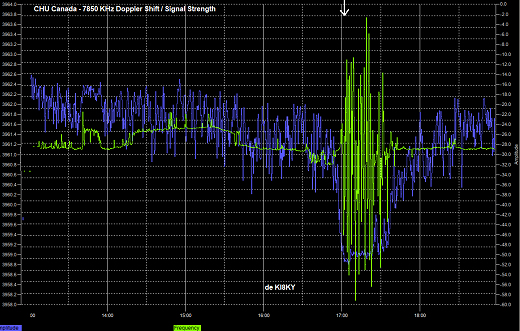
Around the world, ham radio operators are experimenting with a new way to detect solar flares--the Doppler Shift method. Brian Curtis of Sault Ste Marie, Michigan, demonstrated the technique during yesterday's X-flare:

Brian-Curtis-X_Flare_CHU_06_20_23_1687302473_strip.jpg


"I monitor the frequency and field strength of Canada's CHU time station transmitting at 7850 KHz," explains Curtis. "During the X-class flare event, I was able to detect the Doppler shift of the station's carrier frequency (green plot). It shifted by 5 Hz, which is a small change, but very obvious!"

When radiation from a solar flare hits Earth's atmosphere, it ionizes the air, temporarily boosting the thickness of our planet's ionosphere. Any radio station skipping off the ionosphere will suddenly find its frequency Doppler shifted. Frequency standards stations such as WWV, WWVH, and CHU transmit carriers with atomic-clock grade frequency stability, so they are perfect sources for Doppler monitoring.

"I have been monitoring radio stations for decades, noting sudden changes in signal strength as a means of monitoring space weather events," says Curtis. "It is only fairly recently (~4 months) that I started to experiment with monitoring the Doppler shift of HF stations. Yesterday's X-class flare event is by far the most dramatic that I have witnessed thus far."

Would you like to detect solar flares this way? The HamSCI citizen science program has developed a Personal Space Weather Station specifically for doppler shift measurements. This technique can also be used to study solar eclipses.


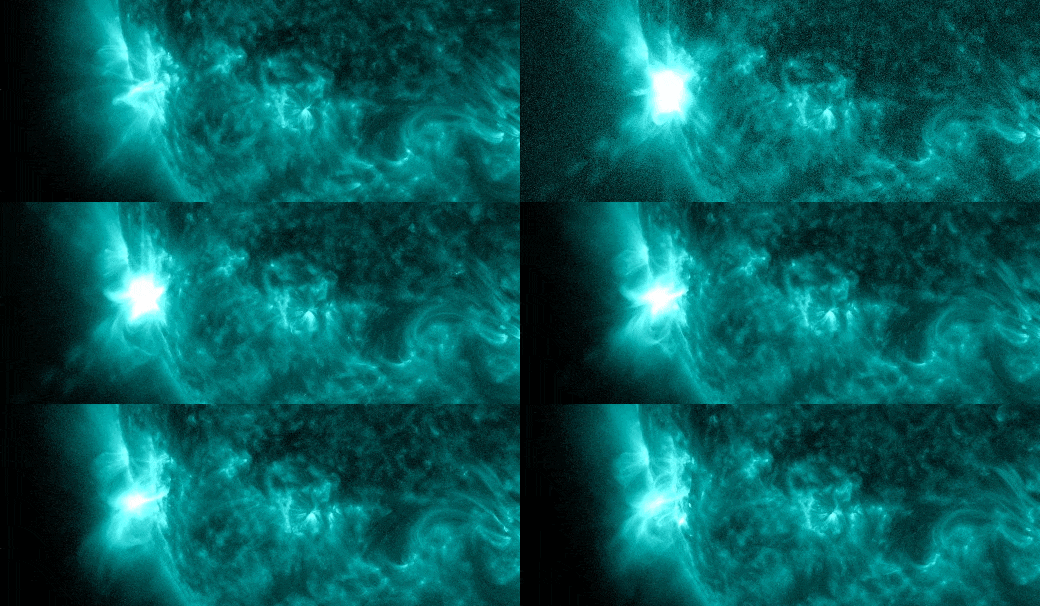
X-CLASS SOLAR FLARE AND CME: New sunspot AR3341 erupted on June 20th, producing an X1.1-class solar flare (1709 UT). NASA's Solar Dynamics Observatory captured the extreme ultraviolet flash:

xflare_anim_strip_opt.gif


Radiation from the flare ionized the top of Earth's atmosphere. This caused a deep shortwave radio blackout over North America: map. Aviators and ham radio operators may have noticed loss of signal at frequencies below 30 MHz for as much as 45 minutes after the flare.

SOHO coronagraphs have since detected a CME emerging from the blast site. The CME's expansion velocity exceeds 1000 km/s (2.2 million mph), according to Type II radio bursts detected by the US Air Force. It's a fast mover that should deliver a potent blow to whatever it hits.

Earth is probably not in the strike zone, although a glancing blow may be possible on June 22nd or 23rd. Confirmation awaits modeling by NOAA forecasters. Solar flare alerts: SMS Text
 
Last edited:
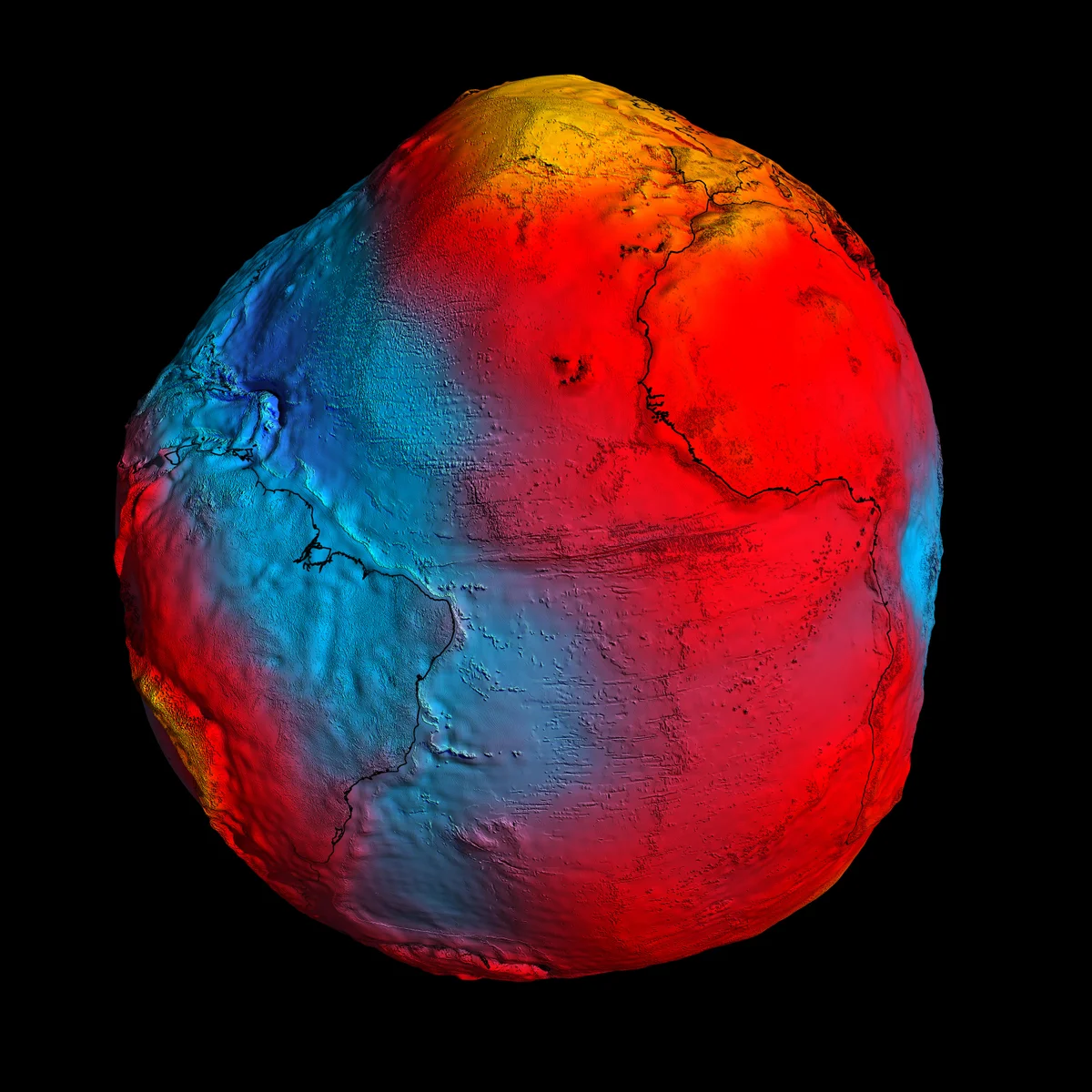
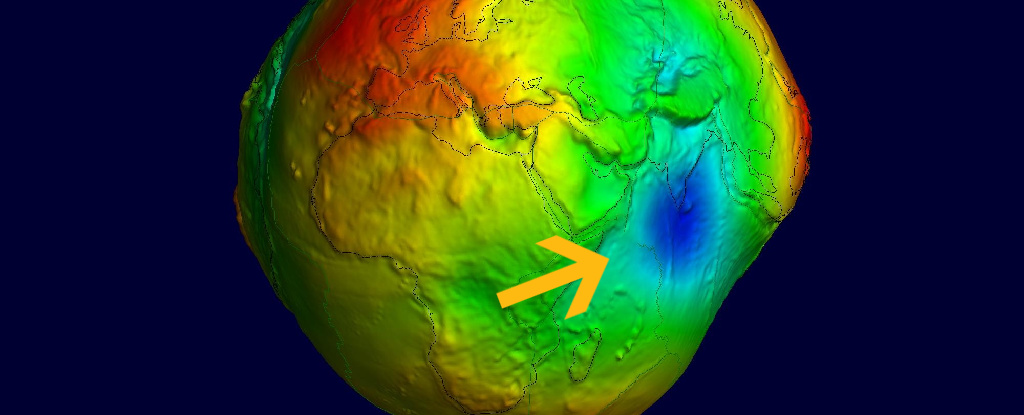
"As a result of the low pull of gravity there, combined with the higher gravitational pull from the surrounding areas, the sea level of the Indian Ocean over the hole is a whopping 106 meters lower than the global average, says the new study’s senior author Attreyee Ghosh, a geophysicist at the Indian Institute of Science (IISc) in Bangalore."


Seems we've seen these wobble plate engines before:


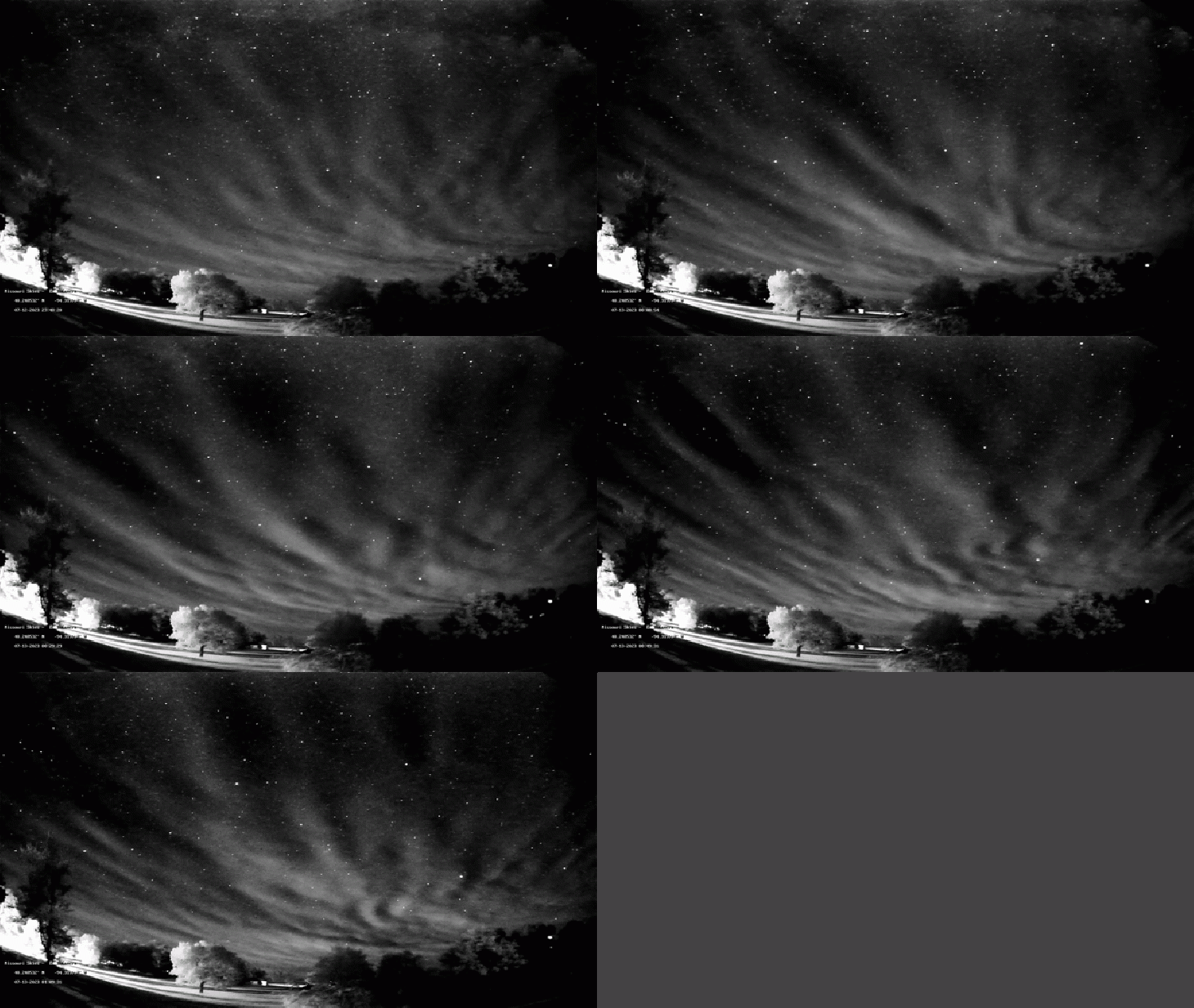
FLOATING IN AN OCEAN OF AIRGLOW: Surging solar activity is amplifying a phenomenon most people have never seen: Airglow. Dan Bush photographed a magnificent display on July 13th from his home in Albany, Missouri:

Dan-Bush-EAST-VER3--GIF-2--July-13-2023_1689279513_lg.gif

Details:
Floating in an Ocean of Airglow When I reviewed my test footage last night (July 11-13, 2023) from my Meteor/Airglow cameras it was almost like I was floating in an ocean of airglow. The skies were very transparent and dark over Northern Missouri this night with clouds moving in later in the morning of the thirteenth. The airglow moved primarily from south to north in waves similar to what one would see in cirrus clouds or ocean waves. Often times my cameras pick up little to no airglow but this evening was exceptional although there have also been other evenings lately that have shown fantastic displays of airglow. I look forward to seeing more. Cameras used in this effort were unmodified off-the-shelf Hikvision Surveillance cameras with the IR cut filter disabled for nighttime viewing of the airglow which is much dimmer than the human eye can detect. “Slow Shutter” settings were also employed allowing stars down to 6 or 7th magnitude to be recorded. Posted here are still images and GIF animations showing the airglow. The time-lapse clips are from a much more comprehensive video of this evening’s activity posted on my YouTube page. The movement of the airglow in real time is much slower than depicted here which is why I sped it up many times to show the motion. YouTube video:
Photographer's website:

"It was almost like I was floating in an ocean of airglow," says Bush. "The faint rippling lights moved primarily from south to north in waves similar to what one would see in cirrus clouds or ocean waves. Often times my cameras pick up little to no airglow, but this evening was exceptional."

Airglow is produced by photochemistry in Earth's upper atmosphere. There is a thin layer of air 95 km high where oxygen atoms (O) and oxygen molecules (O2) mix together. When O bumps into O2, the collision creates a spark of green light--airglow.

Solar Max is boosting this process. Right now, the active sun is heating Earth's upper atmosphere, increasing the rate of O vs. O2 collisions. Brighter-than-normal airglow is the result.

"There have also been other evenings lately that have shown fantastic displays of airglow," says Bush. "I look forward to seeing more."

more images: from Juan Carlos Casado of Sant llorenç de la Muga, Girona, Spain;

 
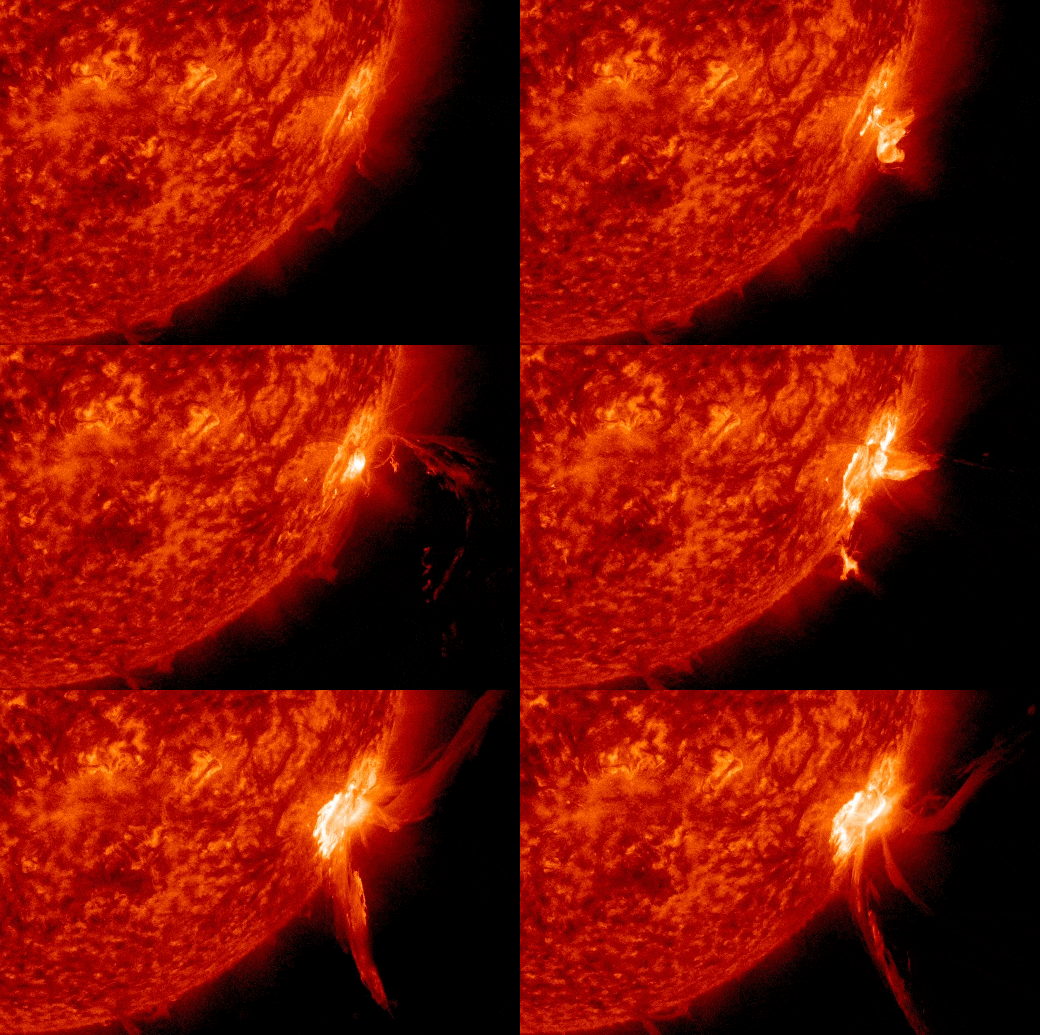
SIGNIFICANT EXPLOSION ON THE SUN (UPDATED): We've been waiting for this. Big sunspot AR3363 just produced a significant solar flare, a long-duration M6-class event during the early hours of July 18th. NASA's Solar Dynamics Observatory recorded the blast near the sun's southwestern limb:

bigone_strip_opt.gif


Energetic protons accelerated by the flare have reached Earth and are now peppering the top of our planet's atmosphere. This is called a "radiation storm." According to data from NOAA's GOES-16 satellite, it is a category S2 event.

Although the explosion was not X-class, it was more powerful than many X-flares would be. Why? Because it lasted so long. The flare's X-ray output was above M5 for more than an hour and above M1 for nearly 4 hours. It had plenty of time to lift a substantial CME out of the sun's atmosphere.

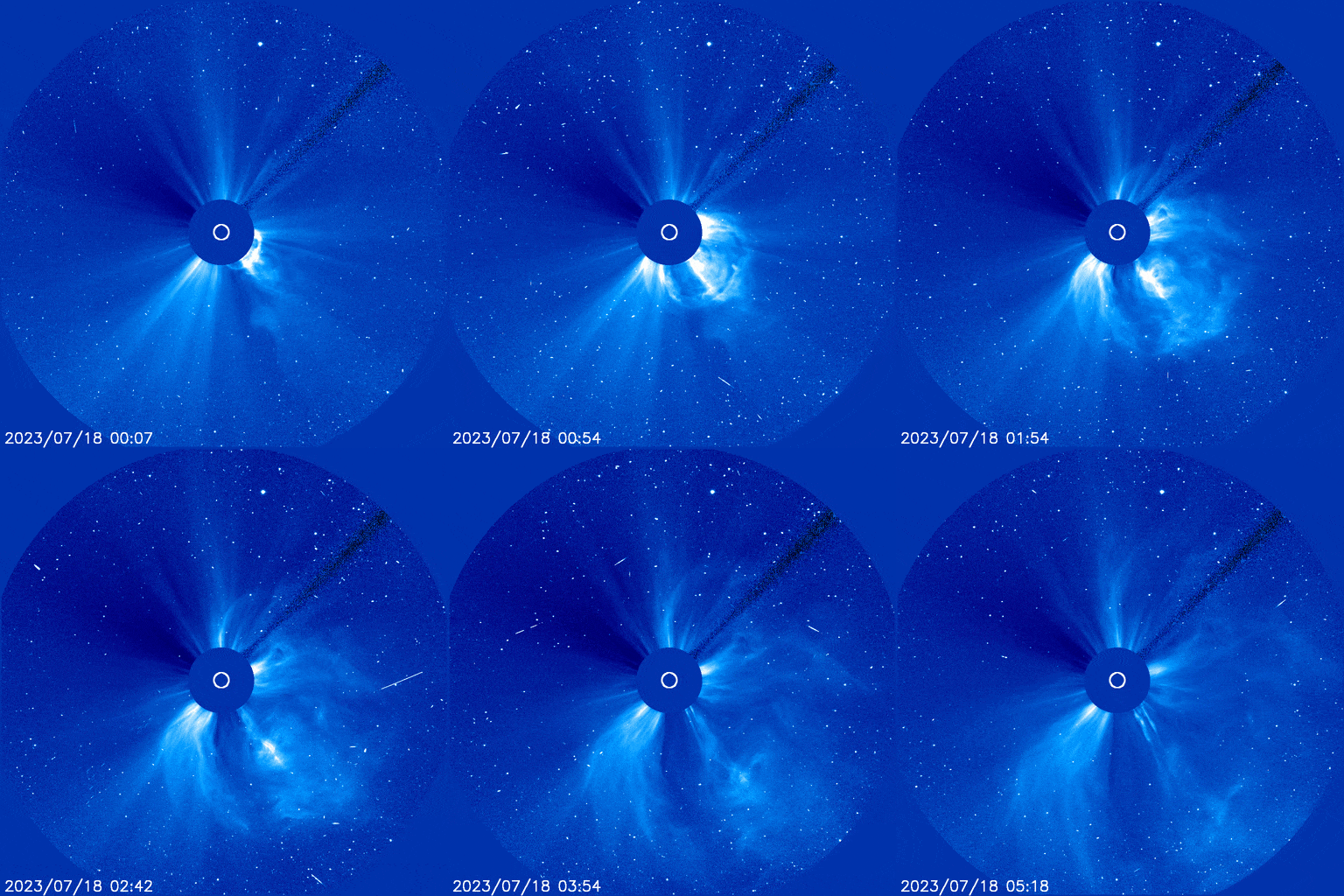
Indeed, SOHO coronagraphs have since detected a bright CME emerging from the blast site:


20230718_021500_2.0_anim.tim-den.gif


lopsidedhalo_opt.gif


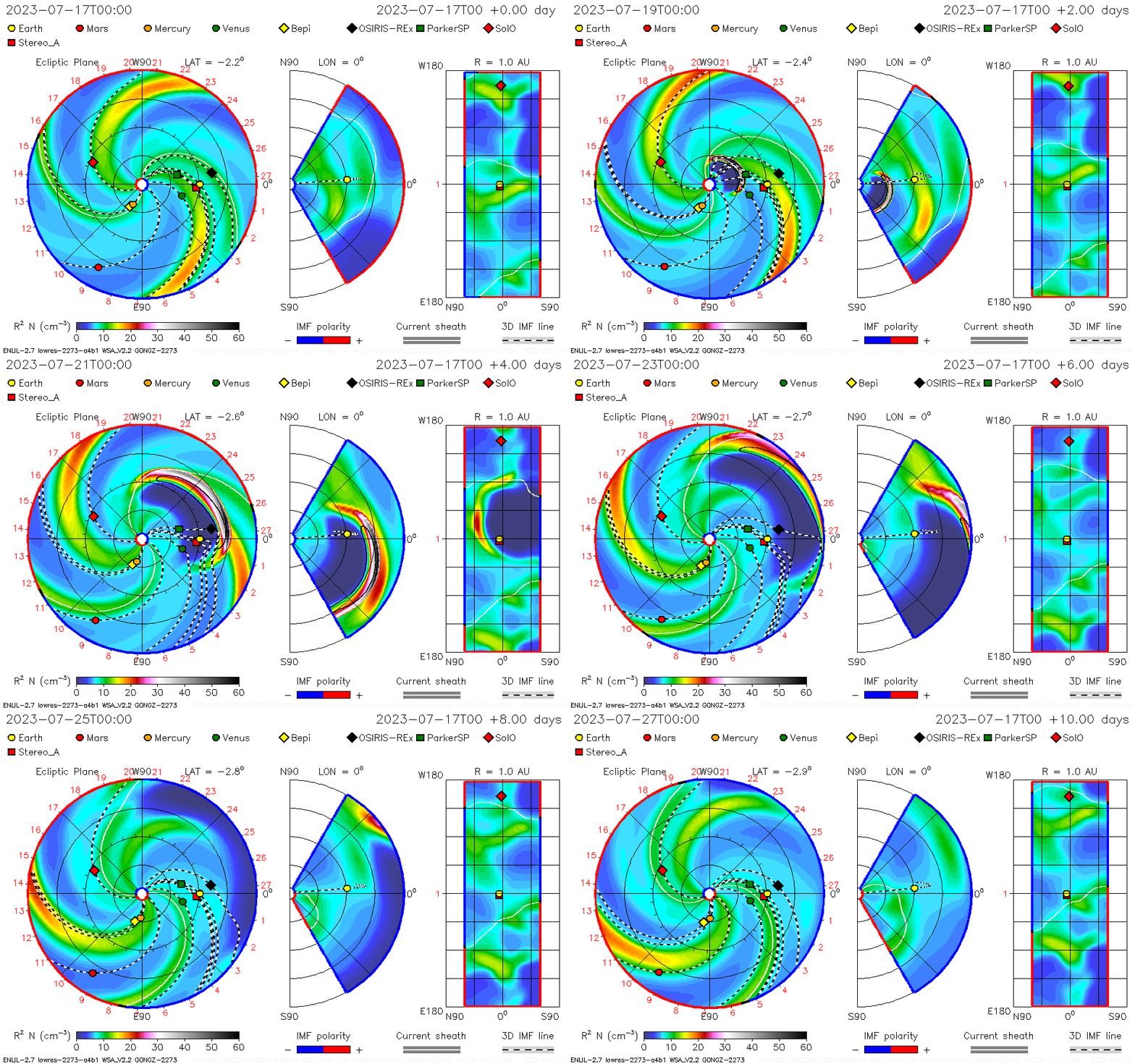
Although the CME is not heading directly for Earth, it appears to have an Earth-directed component. A NASA model suggests it could deliver an effective glancing blow as early as July 20th (0000 UT). NOAA is doing their own modeling, and results should be available soon.

Our preliminary forecast: The CME's flank will reach Earth on July 20th. Its impact could spark G1 to G2-class geomagnetic storms, with a slight chance of G3. Stay tuned. Solar flare alerts: SMS Text

 
Back
Top