Weird science stuff

It ain’t just the viruses and bacteria…

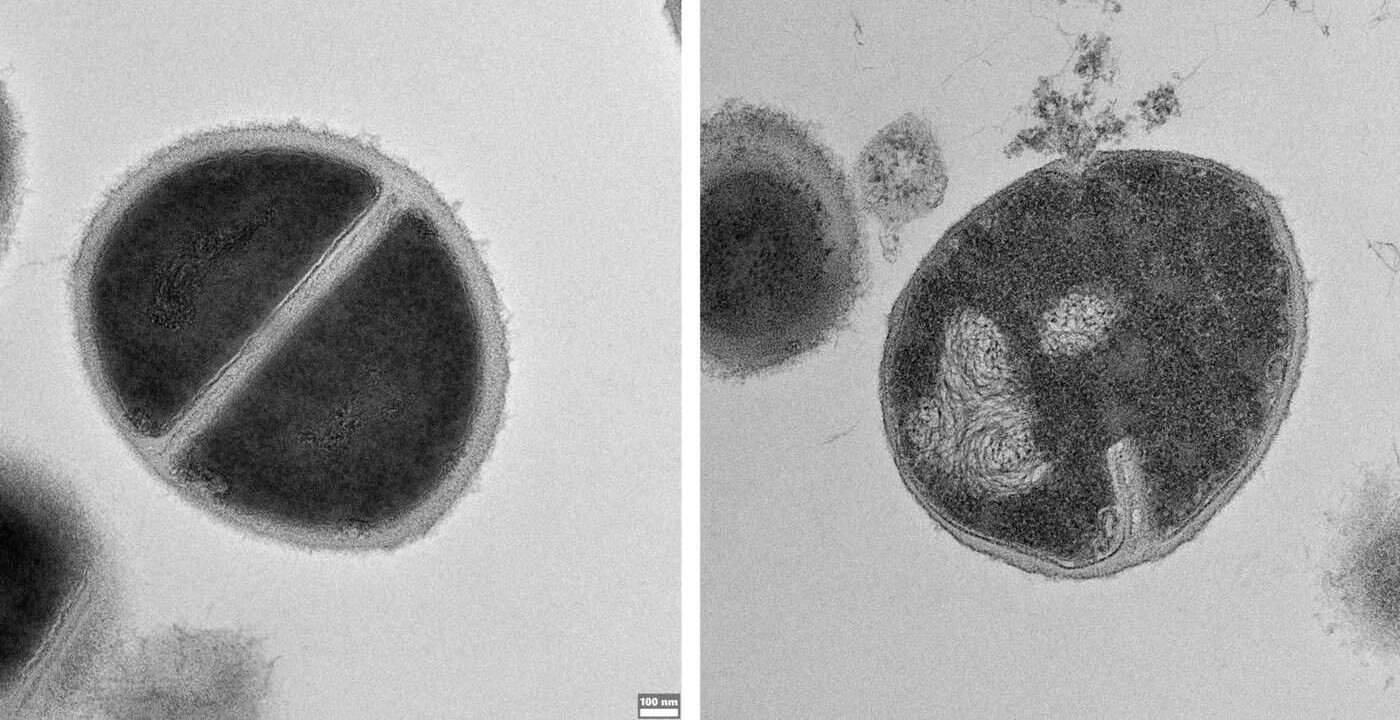
“Resistance to azoles is spreading due to the use of a class of fungicides in agriculture, known as the DMIs. Resistance can double the risk of mortality from invasive aspergillosis.

According to the study, strains resistant to azoles are over five times more likely to acquire resistance to new treatments currently in clinical trials.

The study follows previous research by the team showing how an agricultural fungicide called ipflufenoquin—currently under consideration by authorities worldwide—could have a devastating effect on a new drug, olorofim, currently being trialed to treat Aspergillus fumigatus infections.

F2G Ltd—a spin-out company from The University of Manchester—invested more than £250 million over 20 years in the development of olorofim, which is in late-stage clinical trials and aims to be clinically deployed within the next few years.

Because olorofim works against azole resistant infections, it could save many lives of affected patients. However, ipflufenoquin, [an agricultural fungicide] could severely impact the new drug because it has the same biological target and kills the fungi the same way as olorofim.

Co-author Dr. Michael Bottery from The University of Manchester said, "Our discovery, coupled with our previous research on the impact of an agrochemical on antifungal resistance, highlights the urgent need for innovative strategies to combat the growing public health threat of antifungal resistance.

"Aspergillus fumigatus produces billions of spores. Even slightly elevated rates of mutation mean it is highly likely resistant mutants will arise."

By exposing billions of spores from genetically different natural strains of Aspergillus fumigatus to a range of drugs they accelerated evolution in the lab to predict how likely it was for resistance to evolve.

Strains that evolve faster, they found, were also the ones already resistant to azoles. These strains had genetic changes in genes that control the fungus's system which repairs mutated DNA—known as the mismatch repair system.“


If it is alive, it has the capacity to develop immunity to almost anything.

The real question is; "Why is anyone surprised."
 
Last edited:
So, this is looking like crotch rot, AKA jock itch, yeast infection in pussy, toenail fungus and athlete's foot can eventually lead to alzheimers plaques in the brain and dementia ??
Some pathological organisms are obligate parasites and very specific as to what and how they infect, the malarial parasite for example. However, many others are simple opportunists and are common in the environment, a lot of bacteria and fungi fall into that category. Give a fungus a warm, moist, dark environment and it’s like a pig in shit. If your immune system can’t fight it off, it can be really tenacious and hard to treat.
 
Last edited:
“Most adults, especially considering what happened 5 years ago, now understand at least a little of how the human immune system works.

But a new study out of Israel has demonstrated that even after 120 years of research, there was a whole new component of that system which is now being theorized as a “gold mine” of potential antibiotics.

Inside each of our cells, the discovering team explains in their study, a tiny structure called a proteasome recycles damaged and dead proteins to make new ones, a vital and normal function of cellular repair and maintenance. However, the proteasome has another responsibility that immunologists have never identified: fighting off bacterial infections.”

 
The dose defines the poison, weird new evidence.

 
More strange biology…

“Superradiance in these cytoskeletal filaments happens in about a picosecond—a millionth of a microsecond. Their tryptophan networks could be functioning as quantum fiber optics that allow eukaryotic cells to process information billions of times faster than chemical processes alone would allow.

"The implications of Kurian's insights are staggering," said Professor Majed Chergui of the École Polytechnique Fédérale de Lausanne (Switzerland) and Elettra-Sincrotrone Trieste (Italy), who supported the 2024 experimental study.”

 
Interesting NASA video of mass spewing off the Sun in the solar wind and coronal mass ejections in this link.


If you wondered where the H2O on this planet comes from, the clouds of ionized mass, including elements up to Iron, mostly protons, AKA ionized H nuclei (just a proton with no electron), up to .5% ionized O nuclei (oxygen atoms with no electrons) and electrons, all the ingredients necessary to combine to form H2O, so when the soup of mass gets caught in the Earth's magnetic field and drawn in to the atmosphere at the magnetic poles.

Some of the mass is captured in the magnetotail in the downwind shadow on the night side of the planet and cooled to a temperature below the ionization threshold, so able to gather electrons and become whole atoms of H and molecules of O2, then link H and O2 = H2O molecules.

330px-Magnetosphere_Levels.svg.png

An artist's rendering of the structure of a magnetosphere:
1) Bow shock.
2) Magnetosheath.
3) Magnetopause.
4) Magnetosphere.
5) Northern tail lobe.
6) Southern tail lobe.
7) Plasmasphere.

Here is a few billion tons of coronal mass ejection spewing into space.

EARTH JUST DODGED A BIG CME: On March 28th, sunspot 4046 exploded to produce the first X-class solar flare in months. The explosion hurled a significant CME into space--complete with internal plasma bullets:

According to a NASA model, the CME's flank will narrowly miss Earth today (3/31/2025). The close encounter might cause a ripple of solar wind to wash over our planet, slightly disturbing the geomagnetic field. A direct hit, on the other hand, could have caused a strong geomagnetic storm with widespread auroras. Maybe next time...

plasmabullets_opt.gif
 
Last edited:
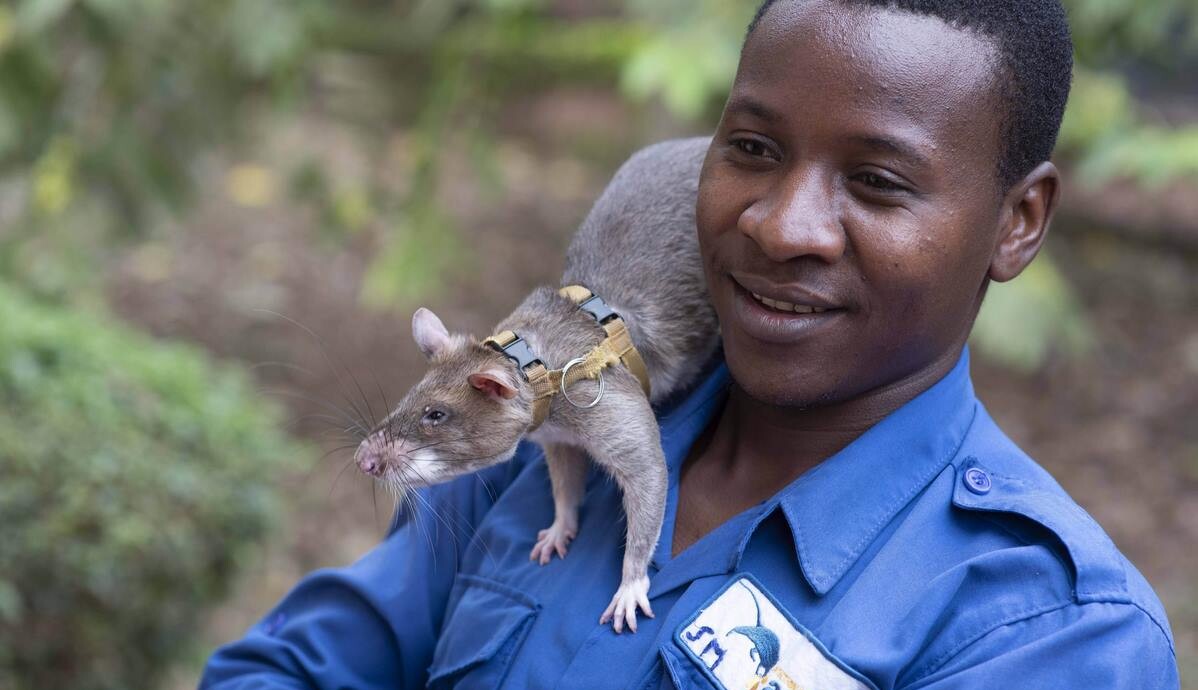
I recall reading about the rats detecting land mines.
thats the last 20% of the article.

(note much of the EU just cancelled out of an agreement to not use them- Poland is putting in over 100K of them on their Eastern Border if funding gets through Parliament).
 
“During mid-February, 2024, YR4's impact probability peaked at 3%. It is the highest probability ever attained by any asteroid of the size range to pose a significant threat in the recorded history of asteroid impact risk estimates.

The observations were briefly halted due to the full moon drowning out the asteroid's faint signal, but the researchers in Finland were the first to obtain new data following the full moon. The observations resulted in a significant drop in the impact probability, which currently stands below 0.001%.

Meanwhile, the latest data and calculations have brought out a new, although a smaller risk: there is currently a 4% chance of the asteroid impacting the moon instead.

"Should the asteroid impact the moon, the Earth-moon system could be clouded with particles detached from the moon and the asteroid, potentially threatening the human space infrastructure and operations," explains Academy Professor Karri Muinonen.”

 
Back
Top