Weird science stuff

 
Odds of an asteroid impact Dec. 22, 2032 are increasing with each new observation and calculation.


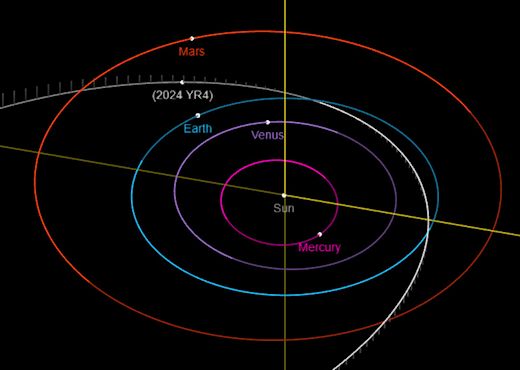
ASTEROID 2024 YR4 UPDATE: The odds just increased again. Asteroid 2024 YR4 now has a 2.6% chance of hitting Earth on Dec. 22, 2032, up from 2.2% a week ago, and only 1% when it was first discovered late last year. Current probabilities are based on 368 observations spanning 54 days. This growing arc of data is improving our knowledge of the asteroid's orbit and, so far, steadily increasing the odds of a strike.


That was the bad news. The good news is, 2024 YR4 will not wipe us out. With an estimated diameter of 40 to 70 meters, it is only a few times larger than the Chelyabinsk meteor that hit Russia in 2013. That space rock exploded in the atmosphere, creating shock waves that shattered glass windows and injured hundreds of people (mainly from broken glass). There were no fatalities.

The size of 2024 YR4 reminds researchers of the Tunguska impactor, which leveled a forest in Russia in 1908. You wouldn't want to be at ground zero, but Earth will survive.

Reminder: There's still a 97.4% chance of a miss. Stay tuned for updates.
Now up to a 3%+ chance.

 
Richard Feynman actually was a "world's foremost authority" in the world of physics and he was a unique teacher in the way he could explain complex things in simple terms that made them easy to understand. Click the link for the full text and links to other of his lectures.


9–1The electric potential gradient of the atmosphere​


On an ordinary day over flat desert country, or over the sea, as one goes upward from the surface of the ground the electric potential increases by about 100
volts per meter. Thus there is a vertical electric field E of 100 volts/m in the air. The sign of the field corresponds to a negative charge on the earth’s surface. This means that outdoors the potential at the height of your nose is200 volts higher than the potential at your feet! You might ask: “Why don’t we just stick a pair of electrodes out in the air one meter apart and use the 100 volts to power our electric lights?” Or you might wonder: “If there is really a potential difference of200
volts between my nose and my feet, why is it I don’t get a shock when I go out into the street?”

We will answer the second question first. Your body is a relatively good conductor. If you are in contact with the ground, you and the ground will tend to make one equipotential surface. Ordinarily, the equipotentials are parallel to the surface, as shown in Fig. 9–1(a), but when you are there, the equipotentials are distorted, and the field looks somewhat as shown inFig. 9–1(b). So you still have very nearly zero potential difference between your head and your feet. There are charges that come from the earth to your head, changing the field. Some of them may be discharged by ions collected from the air, but the current of these is very small because air is a poor conductor.

 
Last edited:
A new type of combination vaccine…

“To develop the vaccine, researchers used vesicular stomatitis virus (VSV), a virus that infects mainly horse and cattle, but altered it to remove glycoproteins from the virus particle's surface—a step that makes the virus incapable of replicating or becoming virulent. Then the researchers added to the surface the spike protein found on the surface of SARS-CoV-2 and a neuraminidase protein found on influenza A. The vaccine works by triggering the host immune system to produce antibodies in response to the two proteins.

The vaccine platform is thermostable, potentially making administration easier and more accessible than the current mRNA COVID-19 vaccines. For influenza, the neuraminidase protein is conserved across many strains of flu, prompting the immune response to multiple strains.”

 
“For decades, physicists have struggled to reconcile the principles of quantum mechanics with those of general relativity. While quantum mechanics governs the behavior of particles at the smallest scales, general relativity describes the force of gravity on cosmic scales. Unifying these two frameworks has been one of the most elusive goals in modern science.

Professor Bianconi's work offers a fresh perspective by treating the metric of spacetime, a key concept in general relativity, as a quantum operator. This innovative approach uses quantum relative entropy, a concept from quantum information theory, to describe the interplay between spacetime geometry and matter.

The study introduces a new entropic action, which quantifies the difference between the metric of spacetime and the metric induced by matter fields.”

 
“The H5N1 virus has become an unexpected threat to many wild animal species. In a recent article published in Nature Reviews Biodiversity, we analyzed how the highly pathogenic avian influenza virus H5N1 is decimating both abundant vertebrate populations and endangered species, while compromising ecosystem functioning and services globally.

The impact of this virus could be considered catastrophic for some wild species of seabirds, such as penguins, skuas, pelicans and many others. Available information suggests that millions of wild birds may have died due to H5N1. The 16% of the wild bird species affected by H5N1 are of conservation concern. It has even affected critically endangered birds, such as the California condor, compromising years of conservation efforts—at least 6% of their wild populations have died from this pathogen.”

 
I've been watching videos on possible explanations for the Egyptian pyramids. Some think they were for energy, Tesla thought so, and they exploded at some point and are now broken. No King was ever buried in any pyramid. Tesla had so many things figured out, and the Rothschilds eventually killed him and stole all of his materials because his ideas would have made everything way simpler which would severely have reduced the banksters profits.

 
It ain’t just the viruses and bacteria…

“Resistance to azoles is spreading due to the use of a class of fungicides in agriculture, known as the DMIs. Resistance can double the risk of mortality from invasive aspergillosis.

According to the study, strains resistant to azoles are over five times more likely to acquire resistance to new treatments currently in clinical trials.

The study follows previous research by the team showing how an agricultural fungicide called ipflufenoquin—currently under consideration by authorities worldwide—could have a devastating effect on a new drug, olorofim, currently being trialed to treat Aspergillus fumigatus infections.

F2G Ltd—a spin-out company from The University of Manchester—invested more than £250 million over 20 years in the development of olorofim, which is in late-stage clinical trials and aims to be clinically deployed within the next few years.

Because olorofim works against azole resistant infections, it could save many lives of affected patients. However, ipflufenoquin, [an agricultural fungicide] could severely impact the new drug because it has the same biological target and kills the fungi the same way as olorofim.

Co-author Dr. Michael Bottery from The University of Manchester said, "Our discovery, coupled with our previous research on the impact of an agrochemical on antifungal resistance, highlights the urgent need for innovative strategies to combat the growing public health threat of antifungal resistance.

"Aspergillus fumigatus produces billions of spores. Even slightly elevated rates of mutation mean it is highly likely resistant mutants will arise."

By exposing billions of spores from genetically different natural strains of Aspergillus fumigatus to a range of drugs they accelerated evolution in the lab to predict how likely it was for resistance to evolve.

Strains that evolve faster, they found, were also the ones already resistant to azoles. These strains had genetic changes in genes that control the fungus's system which repairs mutated DNA—known as the mismatch repair system.“


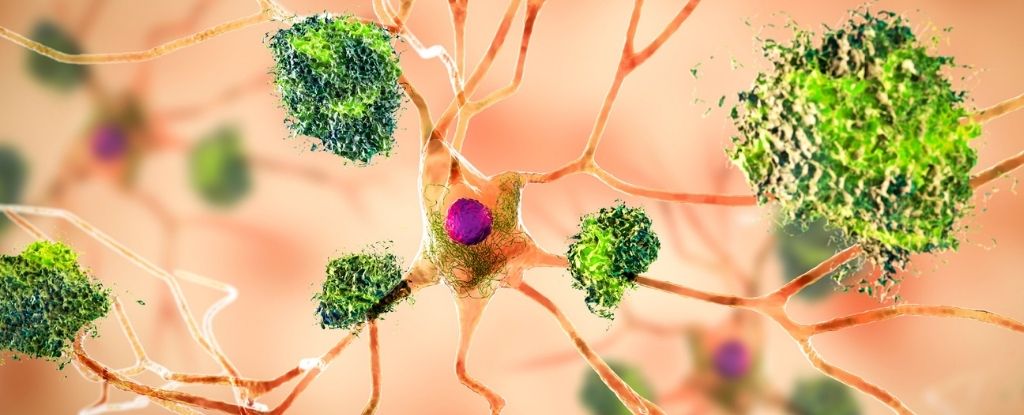
So, this is looking like crotch rot, AKA jock itch, yeast infection in pussy, toenail fungus and athlete's foot can eventually lead to alzheimers plaques in the brain and dementia ??
 
So, this is looking like crotch rot, AKA jock itch, yeast infection in pussy, toenail fungus and athlete's foot can eventually lead to alzheimers plaques in the brain and dementia ??
Well that sucks, as though I have only 1/4 of the family tree with a history of Alzheimers, every way that yeast and fungus can get to me, it does. Maybe I should try those kombucha drinks and yogurt. And get back on boron and turmeric
 
Back
Top