Weird science stuff

From the article…

”The genome of SARS-COV-2 contains a peculiar pattern of unique restriction endonuclease recognition sites allowing efficient dis- and re-assembly of the viral genome characteristic of synthetic viruses. Here, we report the likelihood of observing such a pattern in coronaviruses with no history of bioengineering. We find that SARS-CoV-2 is an anomaly, more likely a product of synthetic genome assembly than natural evolution. The restriction map of SARS-CoV-2 is consistent with many previously reported synthetic coronavirus genomes, meets all the criteria required for an efficient reverse genetic system, differs from closest relatives by a significantly higher rate of synonymous mutations in these synthetic-looking recognitions sites, and has a synthetic fingerprint unlikely to have evolved from its close relatives. We report a high likelihood that SARS-CoV-2 may have originated as an infectious clone assembled in vitro.”

What’s that old saying? Oh, yeah, “Fuck around and find out!”
Well at least it wasn't modified further to make it say, 80% lethal. At least we have that comforting thought.
 
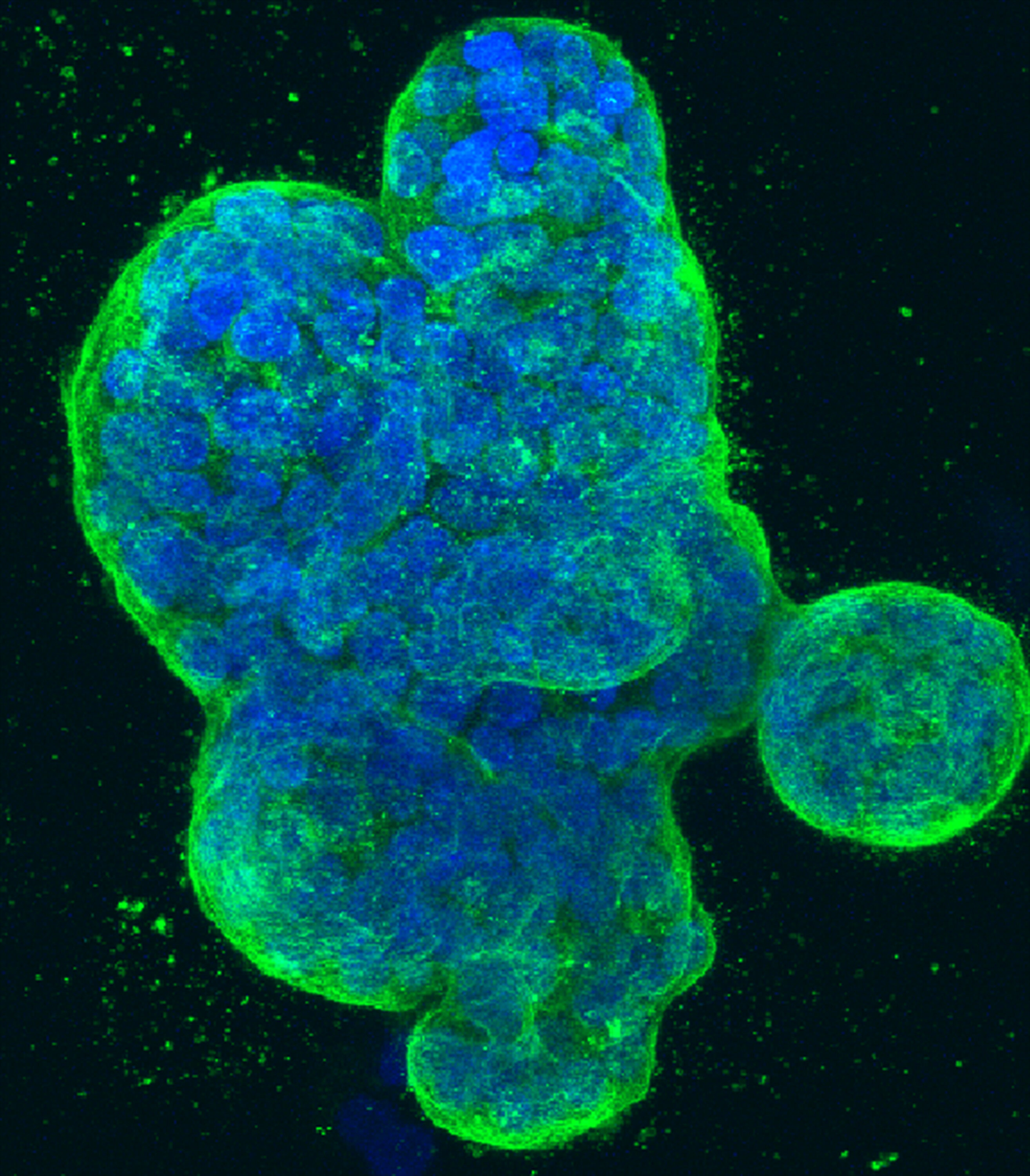
Good news for breast cancer patients, at least for some of them. I don’t trust surgery or radiation to be completely effective. Chemotherapy is still the best way to make sure every single cell in your body receives treatment.


…and for triple negative breast cancer…
 
D6a8KHp.jpg
 
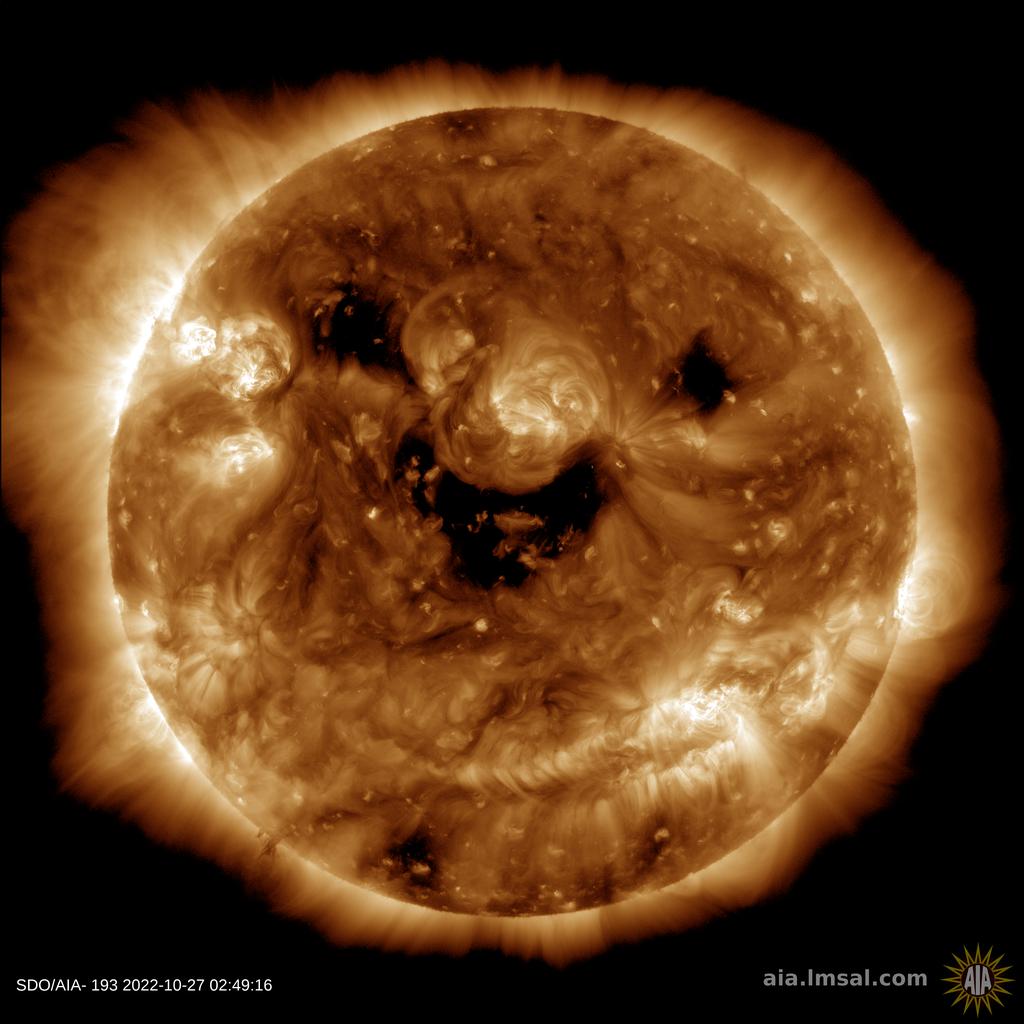
For this year's Halloween the Sun is a smiling Jack-O-Lantern.

coronalhole_sdo_blank.jpg


GEOMAGNETIC STORM WATCH: NOAA forecasters say there is a chance of G1-class geomagnetic storms on Oct. 29th when a stream of solar wind is expected to hit Earth's magnetic field. The gaseous material is flowing from a cheerful hole in the sun's atmosphere. High latitude sky watchers should be alert for auroras this weekend. Aurora alerts: SMS Text
 
Maybe there is more water/ice on Mars than we thought.


Maybe there is more water/ice on Mars than we thought.


I check that site daily. Pretty cool stuff. I like the biological stuff mainly. Probably because I’m pretty vain and I don’t enjoy being ill.
 
I check that site daily. Pretty cool stuff. I like the biological stuff mainly. Probably because I’m pretty vain and I don’t enjoy being ill.
I lean towards the biology too, of course, but the physical sciences probably more easily impress me because I know so much less about them. Also, some of the physical sciences get pretty exotic. Biology, for the most part, is pretty down to earth.
 
 
Planet killers near earth.

”"Only about 25 asteroids with orbits completely within Earth's orbit have been discovered to date because of the difficulty of observing near the glare of the sun," Scott S. Sheppard, an astronomer at the Earth and Planets Laboratory of the Carnegie Institution for Science and the lead author of the paper describing the new discovery, said in a statement(opens in new tab).

The discovery of 2022 AP7, which would be much more damaging than Chelyabinsk if it were to hit Earth, was only possible thanks to the supersentive Dark Energy Camera (DEC) at the Cerro Tololo Inter-American Observatory in Chile, which scans the sky during twilight hours when these asteroids can be detected within two 10-minute periods each day.

"So far we have found two large near-Earth asteroids that are about 1 kilometer [0.6 miles] across, a size that we call planet killers," Sheppard said.”

https://www.space.com/dangerous-asteroid-discovered-in-sun-glare
 
This metal could possibly replace silicon when mixed with nitride. Gallium nitride electronics are far more efficient and lose less energy. Fascinating?

 
Some interesting reading on a variety of lab accidents while handling infectious agents. I had one myself years ago. I was preparing a negative stain of SSPE capsids for electron microscopy. I had the grid with the sample in one hand and a stoppered vial in the other. I used my little finger to curl around and remove the stopper while holding the vial and forceps with the grid, but I was trying to make sure I didn’t pop it too suddenly and spill the liquid. When the stopper suddenly came off, I over compensated the other way and stabbed my finger through the glove with the forceps. Forceps for handling grids for electron microscopy are like needles so it didn’t take much to penetrate. I felt the blood rush out of my face when it happened and I, and the researcher who brought in the sample, just sort of stared at each other for about 10 seconds. We discussed the methods used to prepare the sample and decided there was minimal risk so…

Since I’ve made it to 74 we were apparently both right about how the virus had been handled. Anyway, some interesting reading in the article below.

 
Last edited:
https://journals.sagepub.com/doi/10.1177/09596836221126133

Ötzi, 30 years on: A reappraisal of the depositional and post-depositional history of the find​
​

November 7, 2022

Abstract
When Ötzi, the Iceman, was found in a gully in the Tisenjoch pass in the Tyrolean Alps in 1991, he was a huge surprise for the archaeological community. The lead initial investigator of the find argued that it was unique, preserved by serendipitous circumstances. It was hypothesised that the mummy with associated artefacts had been quickly covered by glacier ice and stayed buried until the melt-out in 1991. It is now more than 30 years since Ötzi appeared. In this paper, we take a closer look at how the find can be understood today, benefitting from increased knowledge gained from more than two decades of investigations of other glacial archaeological sites, and from previous palaeo-biological investigations of the find assemblage. In the light of radiocarbon dates from the gully and new glaciological evidence regarding mass balance, it is likely that Ötzi was not permanently buried in ice immediately after his death, but that the gully where he lay was repeatedly exposed over the next 1500 years. We discuss the nature of the ice covering the site, which is commonly described as a basally sliding glacier. Based on the available evidence, this ice is better understood as a non-moving, stationary field of snow and ice, frozen to the bedrock. The damaged artefacts found with Ötzi were probably broken by typical postdepositional processes on glacial archaeological sites, and not, as previously claimed, during conflict prior to Ötzi’s flight from the valley below.

-snip- + more at link​

Y3MXZEY.jpg
 
This metal could possibly replace silicon when mixed with nitride. Gallium nitride electronics are far more efficient and lose less energy. Fascinating?

Pretty much every LED made for the last 15 years uses GaN. About 10 years ago, they figured out GaN over a silicon substrate for a lot of applications. Silicon is currently the limiting factor, we've reached the absolute limit if it. Once we figure out what we can use that doesn't have the limitations of silicon, some really interesting stuff is going to happen. They still haven't figured out a true white LED yet, current white LED is actually the same recipe as blue, with phosphorus added in different quantities to alter the wavelength.
 
Back
Top