Weird science stuff

Note that Ivermectin is one of the drugs to control parasites.

 
I’ve never quite understood the hysteria around trying to breed a better human. We could sure use all the help we can get.

Or Covid vaccines. Or gain of function research. Or climate science."

Sure, scientists can absolutely be trusted.

...with a gun to their heads.
 
I’ve never quite understood the hysteria around trying to breed a better human. We could sure use all the help we can get.
You make a great point that only an absolute moron couldn't grasp. 👌

rvmaW4x.jpg
 
That could be you asshole.
Post a pic of yourself.

Anyway, how about a flying 300 mph train?

 
No thread about science can ever have enough of the absolutely insane, mind boggling and paradoxical nature of the two slit experiment. This is one of the more concise, simple explanations of something that makes no intuitive sense at all, yet has been confirmed countless times experimentally.

 
No thread about science can ever have enough of the absolutely insane, mind boggling and paradoxical nature of the two slit experiment. This is one of the more concise, simple explanations of something that makes no intuitive sense at all, yet has been confirmed countless times experimentally.


So apparently whatever is "spying" on the atoms, when it's plugged in, is somehow affecting the field? I mean, don't electronics have some sort of electrical field?
That was a cool video... 🤯
 
So apparently whatever is "spying" on the atoms, when it's plugged in, is somehow affecting the field? I mean, don't electronics have some sort of electrical field?
That was a cool video... 🤯
Yeah, it just completely fucks with my mind. The probability of what the thing is collapses when it is observed. If you look for particles, you find particles, look for waves, you find waves. This isn’t even one of the strangest experiments. There’s one other that just makes you want to go shrug your shoulders and give up. Here’s a brief explanation of effect of observing quantum behavior.

”Strange as it may sound, interference can only occur when no one is watching. Once an observer begins to watch the particles going through the openings, the picture changes dramatically: if a particle can be seen going through one opening, then it's clear it didn't go through another. In other words, when under observation, electrons are being "forced" to behave like particles and not like waves. Thus the mere act of observation affects the experimental findings.”

 
Last edited:
So ... poon gets tang the old fashioned way ...

Seems like the other 38 genders would too, or was the study done by heterophobes?
 
interesting info on how CRISPR gene editing carries a heretofore unknown risk.

”p53 is a protein known as the guardian of the genome. It detects DNA damage and leads the cells to stop dividing and can cause programmed death, thus preventing them from reproducing and expanding the "mistakes" in their DNA. Therefore, p53 underlies a natural protection mechanism against cancer and other DNA damage-related complications.

CRISPR gene editing often requires cutting both DNA strands. In some cases, this manipulation can trigger a p53 response, in which edited cells can be "tagged" as damaged and are then eliminated, thus reducing the efficiency of the gene editing process.

However, the main complication regarding p53 and gene editing is that cells that overcome CRISPR editing might do so precisely because of defective p53 functioning. That is to say, these cells may be less able to detect DNA damage and/or tag cells for programmed death. As a result, the gene editing procedure could end up favoring cell populations that have unstable genomes, meaning they are prone to accumulating further mutations, thus increasing the risk of developing malignancies.

"This unwanted consequence might incur a risk of genomic instability, which is highly undesirable in the context of ex vivo CRISPR therapies, in which cells from a patient are edited in the lab and reintroduced back into the patient. We hope that our study provides some guidelines on how to design safer CRISPR reagents, and encourages further research into this issue," concludes Dr. Supek.”

https://phys.org/news/2022-08-gene-crisprcas9-cell-toxicity-genome.html
 
Last edited:
Shitty writing, and utterly retarded conclusions. JFC.
I actually knew the woman at NIH who was one of the first to prove two (at the time) revolutionary ideas in neuroscience. She was a cool lady, always kidding around but very bright. (I agree with you about that article though).

1. The human brain continues to add cells, neurons, in adults.
2. Normal human marrow contains cells capable of differentiating into something as sophisticated as a functioning neuron.

Here is the publication. I was in her lab for work and she had to keep running out of the office because NIH and her institute both had press releases and she was getting calls from all over the world about it. It was such a simple, clever idea she had too. It would have been really interesting, if the above is true, to see by genetic analysis, what percent of Y positive cells were genetically sourced to marrow donors.

 
Researchers discover your gut might be contributing to Alzheimer’s.

”The researchers found evidence that a molecule containing a very potent microbial-generated neurotoxin (lipopolysaccharide or LPS) derived from the Gram-negative bacteria Bacteroides fragilis in the human gastrointestinal (GI) tract generates a neurotoxin known as BF-LPS.

"LPSs in general are probably the most potent microbial-derived pro-inflammatory neurotoxic glycolipids known," says Dr. Lukiw. "Many laboratories, including our own, have detected different forms of LPS within neurons of the Alzheimer's disease-affected human brain."”

 
“A previously known but newly named ant Anonychomyrma inclinata, was particularly special, with its support of the endangered Bulloak Jewel Butterfly, Hypochrysops piceatus.

“The ecological requirements for this beautiful butterfly are very narrow, which is probably why it is so rare,” CSIRO Entomologist David Yeates said.

“The ant species we’ve now named needs to be nesting in a mature bulloak, Allocasuarina luehmannii. The butterfly caterpillars live under bark and are carried to soft bulloak leaves to feed at night by ‘babysitter’ ants.”

“The ants protect the caterpillars from predators and receive a sugary gift from the caterpillars, a win-win for both species.””


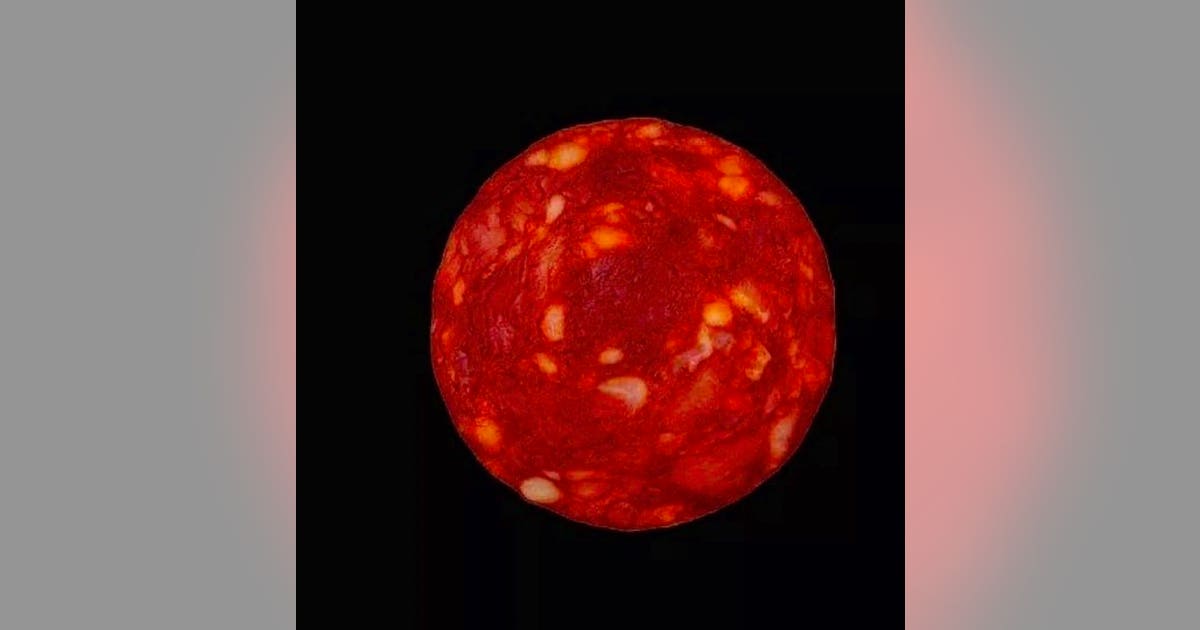
Analyzing data from NASA's Hubble Space Telescope and several other observatories, astronomers have concluded that the bright red supergiant star Betelgeuse quite literally blew its top in 2019, losing a substantial part of its visible surface and producing a gigantic Surface Mass Ejection (SME). This is something never before seen in a normal star's behavior.

Our Sun routinely blows off parts of its tenuous outer atmosphere, the corona, in an event known as a Coronal Mass Ejection (CME). But the Betelgeuse SME blasted off 400 billion times as much mass as a typical CME from our Sun!

~~~~~~
Betelgeuse is only 550 light years from Earth and its size, its diameter, is larger than Jupiter's orbit, so consider ourselves within range if this thing throws another similar tantrum and it is aimed at us.
 
Last edited:
Back
Top