AI generated word salad offers proof of when a train leaves the station in Keokuk today at Noon at a variable acceleration rate eventually achieving 69 MPH 1/9th of 75 miles from Peoria, and a steamship leaves the dock in Katmandu at 14:26.15 Zulu time the 2rd of June, 1935, they will collide due to time dilation underclocking the overthrusters initiating the Big Crunch at precisely the moment the path of everything crosses the zeroth axis in borrowed time before noon the day before. Any cheerleader can see that just doing the math in her head.Gunther Kletetschka, physicist - proposes that time has three dimensions and space is only its consequence - this theory could forever change the way we understand the universe.
Blanquivioletas EN
unionrayo.com

1 / 10

Vigilante Parts
2 / 10

Dynamic
3 / 10

Pacific
4 / 10

Madcap
5 / 10

Bigtime Automotive
6 / 10

DHR Motorsports
7 / 10

Probe
8 / 10

ATD
9 / 10

Jesel
10 / 10

Precision

You are using an out of date browser. It may not display this or other websites correctly.
You should upgrade or use an alternative browser.
You should upgrade or use an alternative browser.
Weird science stuff
- Thread starter 99PanozAIV
- Start date
99PanozAIV
Platinum Member
- Joined
- Mar 10, 2020
- Messages
- 16,727
- Reaction score
- 34,890
- Points
- 153
Probably…but I doubt it.
Probability theory is undeniable proof of what might or might not never be.Probably…but I doubt it.
If you thought life comes at you fast, it turns out we are moving through the Universe 3 times faster than previously expected

 phys.org
Our solar system is moving faster than expected
How fast and in which direction is our solar system moving through the universe? This seemingly simple question is one of the key tests of our cosmological understanding. A research team led by astrophysicist Lukas Böhme at Bielefeld University has now found new answers, ones that challenge the...

A Warning From the Trees: Miyake Events
Jan. 30, 2025: (Spaceweather.com) How bad can a solar storm be? Just ask a tree. Unlike human records, which go back hundreds of years, trees can remember solar storms for millennia. Nagoya Univers…
 spaceweatherarchive.com
The 774-75 AD storm was at least 10 times stronger than (link)-> the Carrington Event of 1859

Mike Swann
Q̇=ṁCpΔT
NASA’s Bennu asteroid contains life’s ingredients — including tryptophan | CNN https://share.google/QcuqhTFaGnHS28g2F

Slick_Rick
Junior Member
- Joined
- Feb 29, 2020
- Messages
- 158
- Reaction score
- 90
- Points
- 28
Very old company, Leica, in one guise or another, has been around over 150 years, was known for a long time as “Ernst Leitz” out of Wetzlar, Germany. They’ve merged, branched out, sold off a lot of divisions. Biosystems and Microsystems are still a part of Danaher right now. My ELCAN DR is from them . ELCAN = E. Leitz Canada. Hexagon in Sweden has spin offs from the Leitz/Wild metrology/geosystems divisions.
Don't they, Leica, build some high quality film cameras? Maybe I'm thinking of a different company?
Yea, that's the place. I came across a shop in Finland called the Kamera Store on YouTube. They were rebuilding them and showing some of the tools they use to time the mechanisms inside. Pretty interesting stuff for sure.

Kamerastore: Professionally Certified Film Cameras, Lenses & More
Film camera specialists since 2010. The EU’s largest selection of quality used camera equipment. Professionally tested & inspected with authentic film-era machinery. Used camera paradise! Buy, sell, or trade. Worldwide shipping.
 kamerastore.com
Here's one of the vids. "How the Germans measured milliseconds mechanically"
Last edited:
99PanozAIV
Platinum Member
- Joined
- Mar 10, 2020
- Messages
- 16,727
- Reaction score
- 34,890
- Points
- 153
Nice find on that video. Yeah, Leica = Leitz Camera. It used to be that the cameras, metrology and microscopy groups were all under one roof. E. Leitz merged with Wild Heerbrugg in Swizerland, then got bought by Cambridge Instruments which was when the Leica name started being used across the entire product line. There were more mergers, acquisitions and reorganizations but Leica Microsystems for the microscopy side of things, and Leica Camera were the last to bear the Leica name IIRC. The microscope division is still one of the 4 large, high end microscopy companies doing business today, the other 3 being Carl Zeiss also out of Germany and Nikon and Olympus out of Japan.Don't they, Leica, build some high quality film cameras? Maybe I'm thinking of a different company?
Yea, that's the place. I came across a shop in Finland called the Kamera Store on YouTube. They were rebuilding them and showing some of the tools they use to time the mechanisms inside. Pretty interesting stuff for sure.
Kamerastore: Professionally Certified Film Cameras, Lenses & More
Film camera specialists since 2010. The EU’s largest selection of quality used camera equipment. Professionally tested & inspected with authentic film-era machinery. Used camera paradise! Buy, sell, or trade. Worldwide shipping.
Here's one of the vids. "How the Germans measured milliseconds mechanically"
Here is an old, still fully functional, Leica camera my dad brought back from the war, very similar to the one in the video. It’s in my living room display shelf with some other interesting camera stuff. The weird “snout” on top of the camera slipped into the accessory shoe, allowed you to create different frame sizes for different lenses (interchangeable lens via Leica screw mount) by rotating the ring around it.

Last edited:
99PanozAIV
Platinum Member
- Joined
- Mar 10, 2020
- Messages
- 16,727
- Reaction score
- 34,890
- Points
- 153
This X flare happened this morning and was they say a huge sunspot cluster is lining up for a big one straight at us in the next few days. https://www.spaceweather.com/archive.php?view=1&day=01&month=12&year=2025
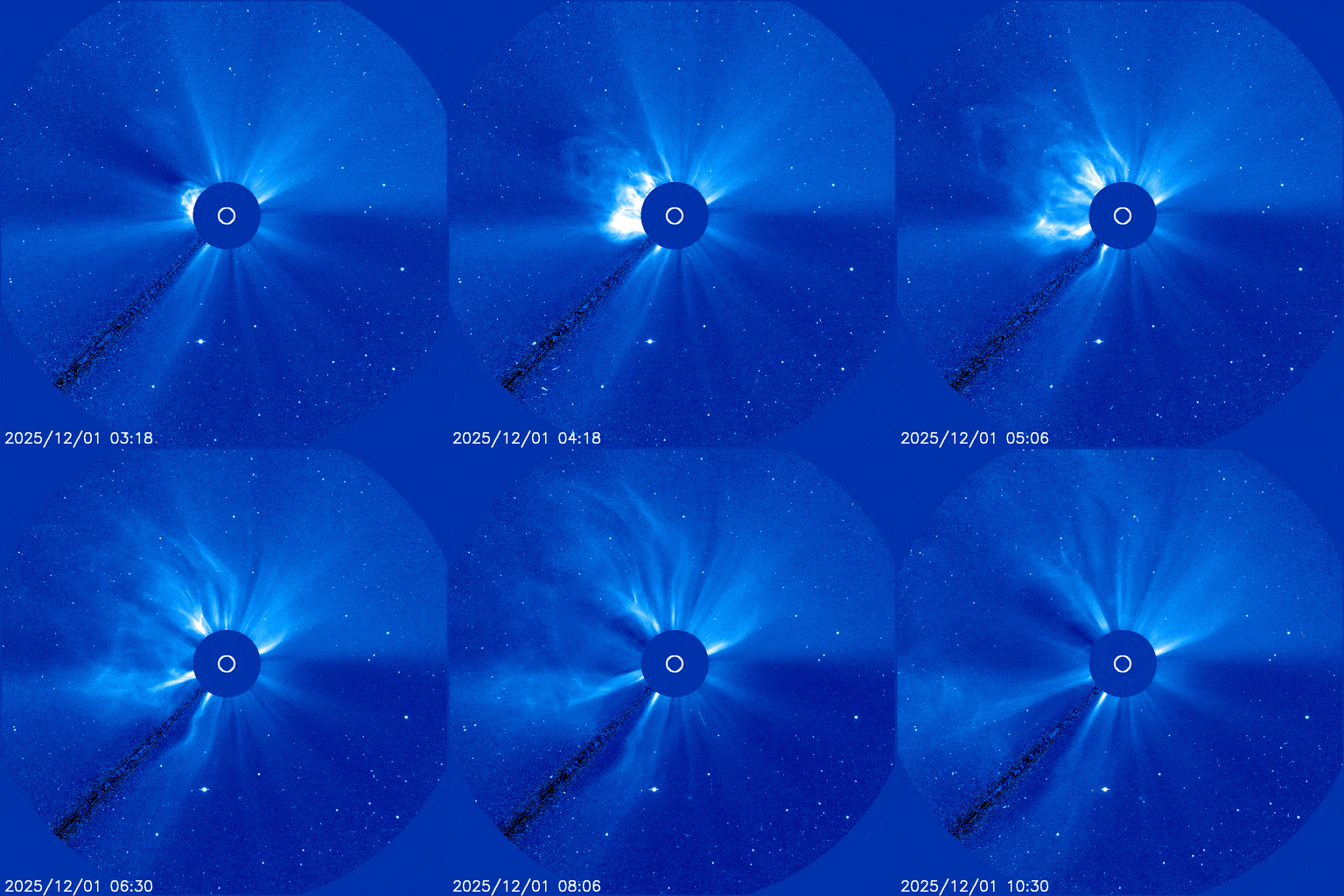
X-CLASS SOLAR FLARE (PERHAPS THE FIRST OF MANY): We were expecting an X-flare today, but this one surprised us anyway. At 0249 UTC, a previously overlooked sunspot exploded. The X1.9 category flash is shown here in an extreme ultraviolet image from NASA's Solar Dynamics Observatory:
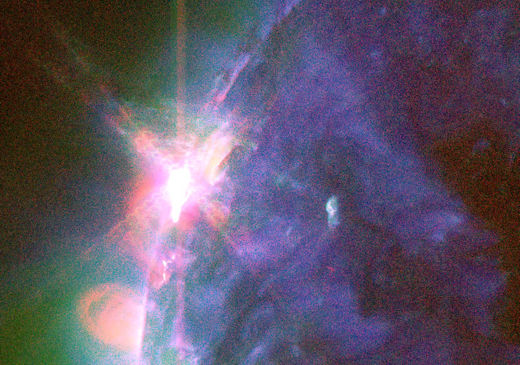
The surprise? The flare did not come from giant sunspot group 4294-96 now emerging in the sun's southern hemisphere. The actual source, an unnumbered northern sunspot, appeared to be harmless until it exploded.
The flare ionized Earth's upper atmosphere and caused a shortwave radio blackout directly above Australia. The explosion also hurled a bright CME into space. NASA models suggest it will miss Earth.
With multiple sunspots posing a threat, more X-flares are likely this week. Solar flare alerts: SMS Text.
GIANT SUNSPOT ALERT: Sunspot complex 4294-96 is so big, it won't fit in a single photo. "I had to combine two panels to capture the massive complex," says Amrit Seecharan, who sends this mosaic from Chaguanas, Trinidad:
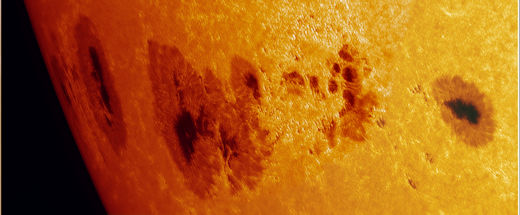
This is one of the biggest sunspot groups of the past 10 years. From end to end, it measures ~180,000 km, and at least five of the dark cores are individually larger than Earth. These dimensions make it an easy target for safely-filtered backyard telescopes. If you don't have a solar filter, try this simple projection technique. Either way, it is spectacular.
NASA's Mars rover saw it first. Last week, Perserverance photographed the giant sunspot through a cloud of dust in Jezero Crater. At the time, it was days away from turning toward Earth--and now it is here.
The sunspot group has an unstable 'beta-gamma-delta' magnetic field that harbors energy for X-class solar flares. Any such explosions today will be geoeffective. Solar flare alerts: SMS Text.
X-CLASS SOLAR FLARE (PERHAPS THE FIRST OF MANY): We were expecting an X-flare today, but this one surprised us anyway. At 0249 UTC, a previously overlooked sunspot exploded. The X1.9 category flash is shown here in an extreme ultraviolet image from NASA's Solar Dynamics Observatory:
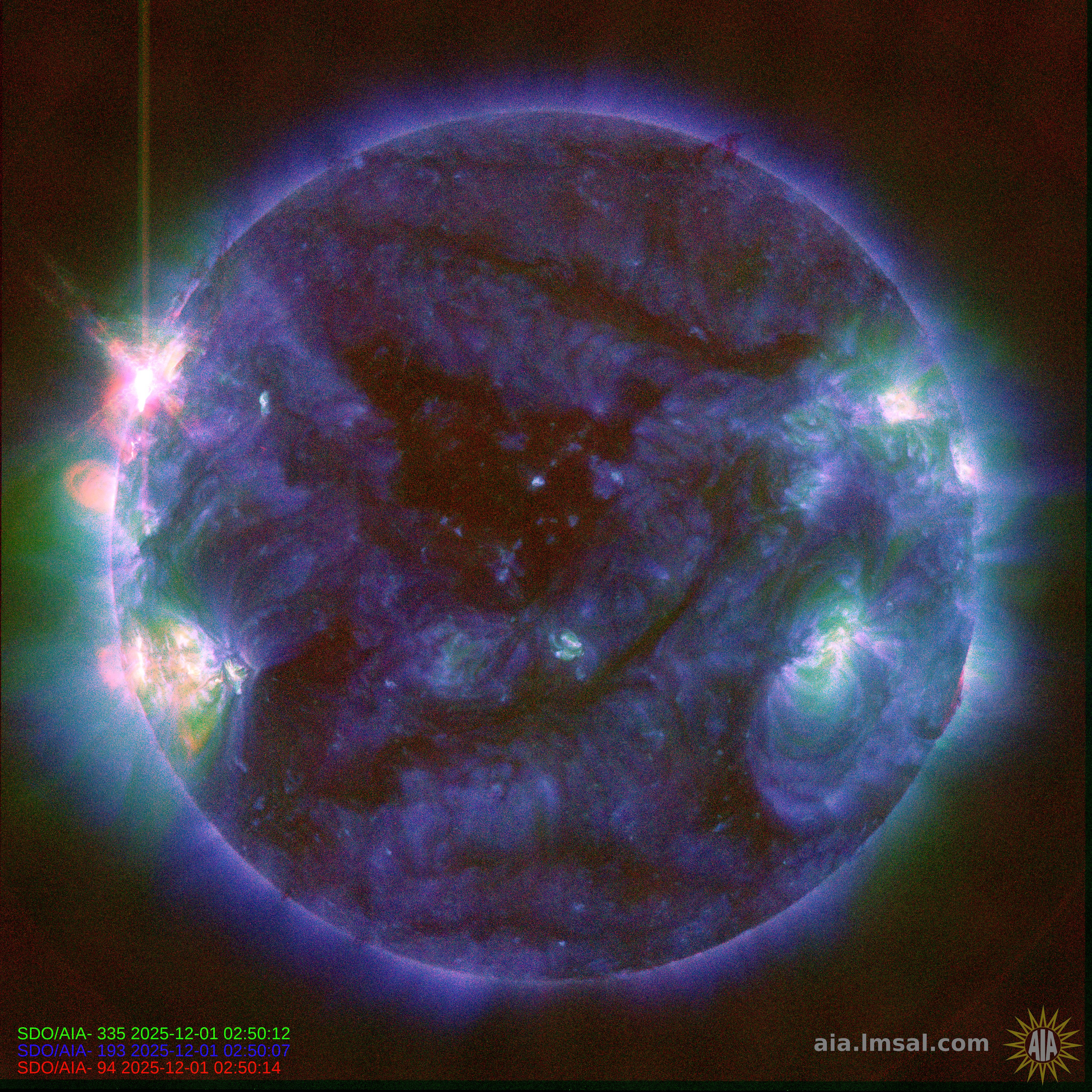
The surprise? The flare did not come from giant sunspot group 4294-96 now emerging in the sun's southern hemisphere. The actual source, an unnumbered northern sunspot, appeared to be harmless until it exploded.
The flare ionized Earth's upper atmosphere and caused a shortwave radio blackout directly above Australia. The explosion also hurled a bright CME into space. NASA models suggest it will miss Earth.
With multiple sunspots posing a threat, more X-flares are likely this week. Solar flare alerts: SMS Text.
GIANT SUNSPOT ALERT: Sunspot complex 4294-96 is so big, it won't fit in a single photo. "I had to combine two panels to capture the massive complex," says Amrit Seecharan, who sends this mosaic from Chaguanas, Trinidad:
This is one of the biggest sunspot groups of the past 10 years. From end to end, it measures ~180,000 km, and at least five of the dark cores are individually larger than Earth. These dimensions make it an easy target for safely-filtered backyard telescopes. If you don't have a solar filter, try this simple projection technique. Either way, it is spectacular.
NASA's Mars rover saw it first. Last week, Perserverance photographed the giant sunspot through a cloud of dust in Jezero Crater. At the time, it was days away from turning toward Earth--and now it is here.
The sunspot group has an unstable 'beta-gamma-delta' magnetic field that harbors energy for X-class solar flares. Any such explosions today will be geoeffective. Solar flare alerts: SMS Text.

13M views · 227K reactions | Who else thinks we should be doing this at Glastonbury?! 🙌 In his 1989 Christmas Lectures series on "Exploring Music", physicist Charles Taylor shared this beautiful visualisation of vibration using a Chladni plate. This
Who else thinks we should be doing this at Glastonbury?! 🙌 In his 1989 Christmas Lectures series on "Exploring Music", physicist Charles Taylor shared this beautiful visualisation of vibration using...
 www.facebook.com

Hollow65
Gold Member
- Joined
- Apr 14, 2021
- Messages
- 8,360
- Reaction score
- 25,063
- Points
- 153
you want to find the secrets of the universe, think in terms of energy, frequency and vibration.13M views · 227K reactions | Who else thinks we should be doing this at Glastonbury?! 🙌 In his 1989 Christmas Lectures series on "Exploring Music", physicist Charles Taylor shared this beautiful visualisation of vibration using a Chladni plate. This
Who else thinks we should be doing this at Glastonbury?! 🙌 In his 1989 Christmas Lectures series on "Exploring Music", physicist Charles Taylor shared this beautiful visualisation of vibration using...
- some dead dude

KwiknFast
We The People
- Joined
- Jan 17, 2021
- Messages
- 14,826
- Reaction score
- 27,560
- Points
- 153
This Chemist May Have Cracked America's Rare Earth Problem<!-- --> | ZeroHedge
ZeroHedge - On a long enough timeline, the survival rate for everyone drops to zero
 www.zerohedge.com
Link from the comments:


This Chemist May Have Cracked America's Rare Earth Problem<!-- --> | ZeroHedge
ZeroHedge - On a long enough timeline, the survival rate for everyone drops to zero
Link from the comments:
Epoch Times = beware new and revolutionary technology investment opportunities that sound almost too good to be true (insert little hat big nose hand rub emoji here)
Also from the comments.

11 hours ago
I have a recipe that will spin straw into gold!
11 hours ago
Trade you for some magic beans.
Honest, they won't give you gas.
99PanozAIV
Platinum Member
- Joined
- Mar 10, 2020
- Messages
- 16,727
- Reaction score
- 34,890
- Points
- 153

Mosquitoes Can’t Resist Smell of Fungus That Lures Them to Their Death Inside Trap Patented by Researchers
It's called Metarhizium, and it's a parasitic fungus that lures insects to their death with an odorous compound called longifolene.
 www.goodnewsnetwork.org
99PanozAIV
Platinum Member
- Joined
- Mar 10, 2020
- Messages
- 16,727
- Reaction score
- 34,890
- Points
- 153

14-Year-Old Wins $25,000 for Origami That Can Hold 10,000 Times its Own Weight
It was during January's wildfires in Southern California and Hurricane Helene, when Wu familiarized himself with deployable disaster shelters.
www.goodnewsnetwork.org
99PanozAIV
Platinum Member
- Joined
- Mar 10, 2020
- Messages
- 16,727
- Reaction score
- 34,890
- Points
- 153
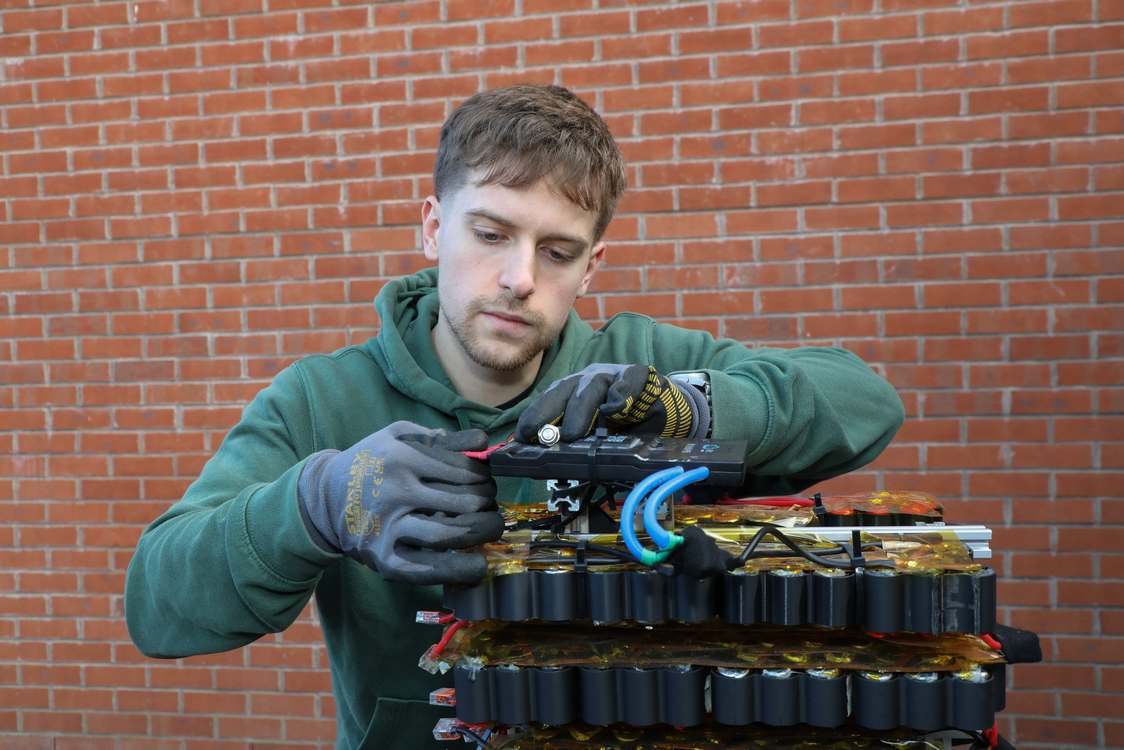
Engineer Powers Entire Home Using 500 Discarded Vapes–Documented in Fascinating Viral Video
A man has built a rechargeable battery pack big enough to power his whole home using just the batteries from discarded vapes. British engineer Chris Doel thinks it’s “absolutely insane” that people use disposable vaping pens, as they come with a lithium-ion battery that can be recharged again...
www.goodnewsnetwork.org
99PanozAIV
Platinum Member
- Joined
- Mar 10, 2020
- Messages
- 16,727
- Reaction score
- 34,890
- Points
- 153
Too bad I’m not about 70 years younger. I might then have had a chance to print my very own Lilu.
 www.goodnewsnetwork.org
First Human Cornea Transplant Using 3D Printed, Lab-Grown Tissue Restores Sight in a ‘Game Changer’ for Millions Who are Blind
The first successful human implant of a 3D-printed cornea made from human eye cells cultured in a laboratory has restored a patient's sight.
www.goodnewsnetwork.org
KwiknFast
We The People
- Joined
- Jan 17, 2021
- Messages
- 14,826
- Reaction score
- 27,560
- Points
- 153

78.7-ft, ‘world’s largest’ suction sails to cut fuel use in ships
Norways Klaveness Combination Carriers has announced it will install the world's "largest ever" suction sails on its newest CABU III.
 interestingengineering.com

Mark O'Neal
Idiot Savant
- Joined
- Mar 9, 2020
- Messages
- 31,282
- Reaction score
- 56,688
- Points
- 153
- Location
- San Tan Valley, AZ
- Website
- www.vigilanteparts.com
My biggest issue with 3D printing it that it isn't a CNC machine. I'm used to Ed. Ed said" Tolerances are for idiots, where do you want the hole."
Printers are cool, but they are not particularly accurate.
Printers are cool, but they are not particularly accurate.
Last edited: