Weird science stuff

Read the link, I think you will find it interesting.


The prototype is made up of a copper strip 1 millimeter wide, 2 centimeters long and 60 micrometers (millionths of a meter) thick that is cantilevered above a thin film of radioactive nickel-63 (an isotope of nickel with a different number of neutrons from the common form). As the isotope decays, it emits beta particles (electrons). Radioactive materials can emit beta particles, alpha particles or gamma rays, the last two of which can carry enough energy to be hazardous. Lal has chosen only isotopes that emit beta particles, whose energy is small enough not to penetrate skin, to be used in his device.


 prototype device uses a copper cantilever 2 , Click to open gallery view
Credit: Provided

The prototype device uses a copper cantilever 2 centimeters long. Future nanofabricated versions could be smaller than one cubic millimeter.

The emitted electrons collect on the copper strip, building a negative charge, while the isotope film, losing electrons, becomes positively charged. The attraction between positive and negative bends the rod down. When the rod gets close enough to the isotope, a current flows, equalizing the charge. The rod springs up, and the process repeats. The principle is much like that underlying an electric doorbell, in which a moving bar alternately makes and breaks the electric circuit supplying an electromagnet that moves the bar.
 
Over my head but I’m still anxious to see this happen for all the unknown spin-offs from it that might happen.

 
Fish are smarter than Democrats. Fish can learn from experience.

 
“Scientists from the Faculty of Physics and Applied Informatics at the University of Lodz have published an article on friction in the journal Small. Their research on "bismuth islands" moving on the surface of graphite confirmed the existence of a totally new form of so-called superlubricity—a friction-free contact between two solid bodies.”

 
Yep, just a matter of time before we get to Find Out.
Man, with a weakened magnetic field like we’ve been experiencing, things can get dicey. We had a solar flare with a more powerful magnetic field in the late 1800’s Moria code operators were getting electrocuted and transmission lines melted.
A nice solar flare will definitely thin the herd. Food supplies gone, transportation/communication gone.

I suggest people make nice with their neighbors before hand. We will all be back in tribes if this were to happen.
 
From that same site.
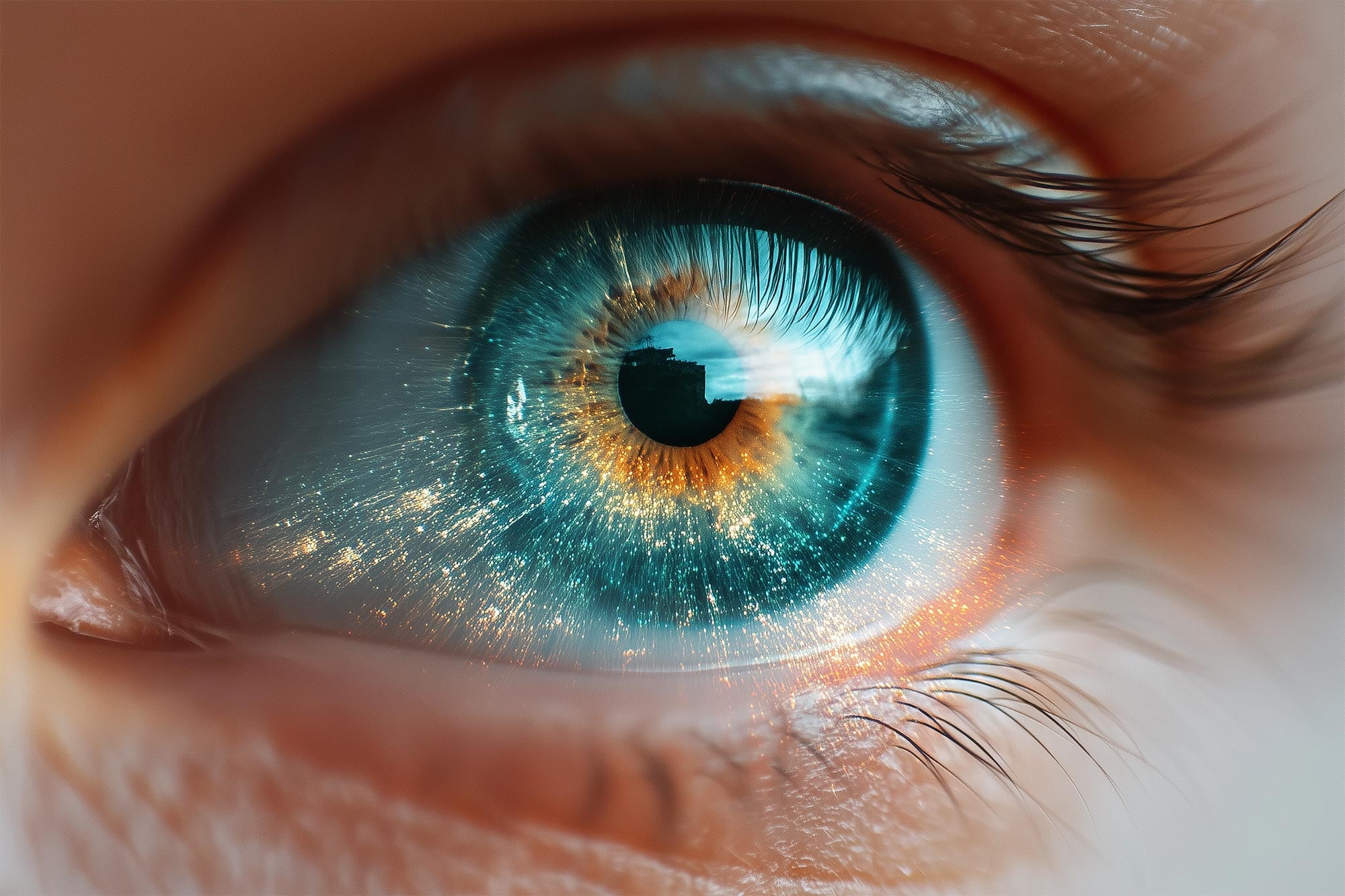
Playing 2 categories of tricks on the eye.
- some sort of Dayglo Teal
- Like some of those light shows that create movable images from drone placement, this is lasers and within the eyeball?
Weird.
 
Last edited:
there's a few clearly fake or misunderstood/mislabelled videos around, but this one behaved according to a few scientific principles I'm aware of. Could still be fake, IDK. Goes on longer than I would have said makes sense.
Thoughts?

On the Canadian prairies we get (used to get? Haven't personally seen it since the very late 1980's) "sheet lighting". Never looked online for details of it, but blast of light with no forked effect (not a fork obscured by fog or snow falling).
 

These guys planted electrodes in spruce trees and observed how they synchronize electrical activity and communicate with each other during an eclipse. Older threes are sensitive to the approaching eclipse hours before it begins.

Research articles

Bioelectrical synchronization of Picea abies during a solar eclipse​


Alessandro Chiolerio
,
Monica Gagliano
,
Silvio Pilia
,
Paolo Pilia
, … See all authors
Published:30 April 2025https://doi.org/10.1098/rsos.241786

Abstract​

Regular light–dark cycles greatly affect organisms, and events like eclipses induce distinctive physiological and behavioural shifts. While well documented in animals, plant behaviour during eclipses remains largely unexplored. Here, we monitored multiple spruce trees to assess their individual and collective bioelectrical responses to a solar eclipse. Trees anticipated the eclipse, synchronizing their bioelectrical behaviour hours in advance. Older trees displayed greater anticipatory behaviour with early time-asymmetry and entropy increases. These results reveal a relationship between trees, shaped by individual age and physiology as well as collective history. This highlights the significance of synchrony in plants, offering new insights into coordinated behaviours in nature.

1. Introduction​

Sunlight and its periodicity drive global weather patterns, seasons and climate and make life possible on our planet. Daily and seasonal cycles of natural light organize biological systems by synchronizing their internal clock with the geophysical cycles of the Earth [1,2].

 
So, now we’re going to have to guess whether our space probes find alien life or just another earthly extremophile (unless there’s some molecular other-handedness involved).

 
Over the weekend I was listening to Eric Weinstein talk about this. He was saying essentially that no one knows shit about shit.
For the last 40 years, we’re still only in the theoretical aspects of quantum mechanics and relativity. It’s a very broad brush. An exciting field for sure, but not much has been proven. I’m just a dumb concrete guy, but I found this interesting.

 
Back
Top