Weird science stuff

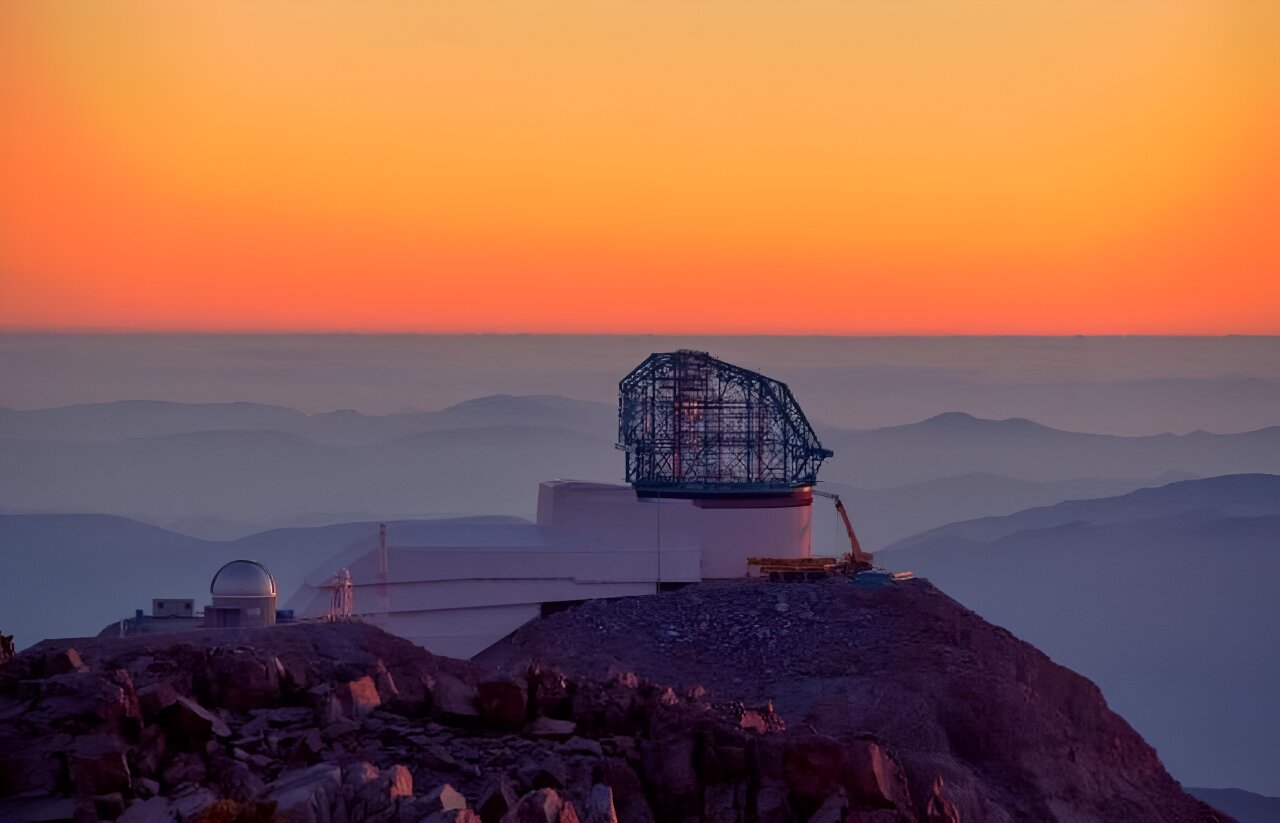
“When the Vera C. Rubin Observatory comes online in 2025, it will be one of the most powerful tools available to astronomers, capturing huge portions of the sky every night with its 8.4-meter mirror and 3.2-gigapixel camera. Each image will be analyzed within 60 seconds, alerting astronomers to transient events like supernovae. An incredible 5 petabytes (5,000 terabytes) of new raw images will be recorded each year and made available for astronomers to study.”
…
“The observatory's 8.4-meter Simonyi Survey Telescope will use the highest resolution digital camera in the world that also includes the world's largest fish-eye lens. The camera is roughly the size of a small car and weighs almost 2,800 kg (6,200 lbs). This survey telescope is fast-moving and will be able to scan the entire visible sky in the southern hemisphere every four nights.”


“The prevailing assumption has been that Einstein's theory of gravity must be modified, or "quantized," in order to fit within quantum theory. This is the approach of two leading candidates for a quantum theory of gravity, string theory and loop quantum gravity.

But a new theory, developed by Professor Jonathan Oppenheim (UCL Physics & Astronomy) and laid out in a paper in Physical Review X, challenges that consensus and takes an alternative approach by suggesting that spacetime may be classical—that is, not governed by quantum theory at all.

Instead of modifying spacetime, the theory—dubbed a "postquantum theory of classical gravity"—modifies quantum theory and predicts an intrinsic breakdown in predictability that is mediated by spacetime itself. This results in random and violent fluctuations in spacetime that are larger than envisaged under quantum theory, rendering the apparent weight of objects unpredictable if measured precisely enough.”


ISRO Chandrayaan2’s photos of Apollo 11 & 12 landing sites​


Marty McGuire | Backyard Astronomy Guy - Apollo-ISRO

 
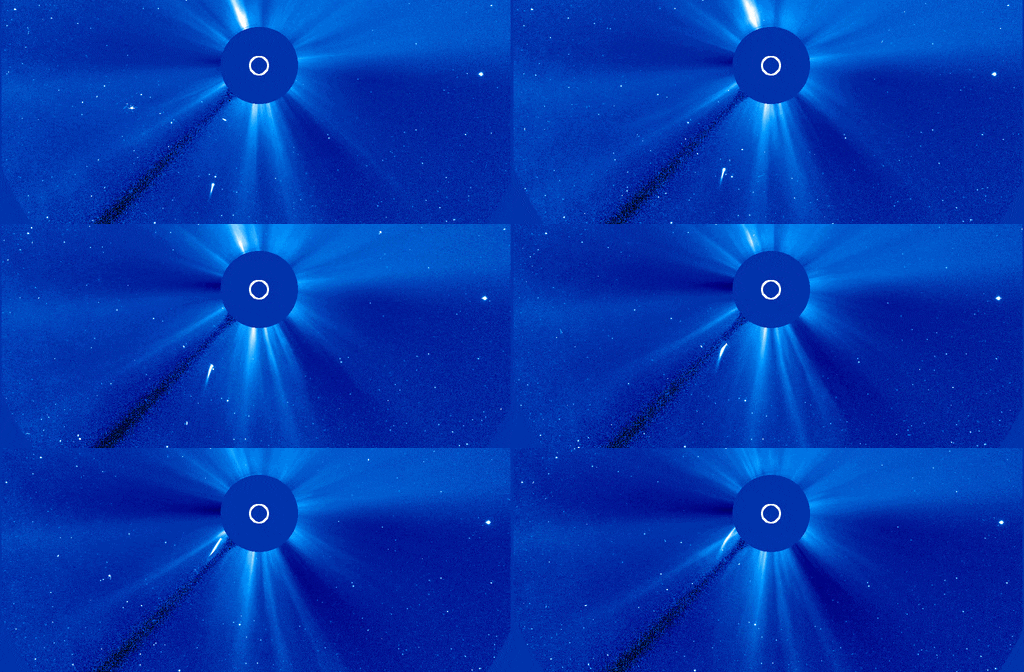
SUNDIVING COMET: By the time you finish reading this, the Solar System will have one less comet. SOHO coronagraphs caught the dirty snowball diving into the sun on Dec. 11th:

The kamikaze comet is a member of the Kreutz sungrazer family. Named after a 19th century German astronomer who studied them in detail, Kreutz sungrazers are fragments from the breakup of a giant comet at least 2000 years ago. Several of these fragments pass by the sun and disintegrate every day. Most are too small to see. This fragment is a big exception.

By now the comet has been vaporized. The next batch of SOHO data will probably show a small cloud of debris and a decapitated tail emerging from behind the sun. R.I.P. comet!

sundiver_crop_opt.gif


Whew, that was a close one. We can all go back to normal now.
 
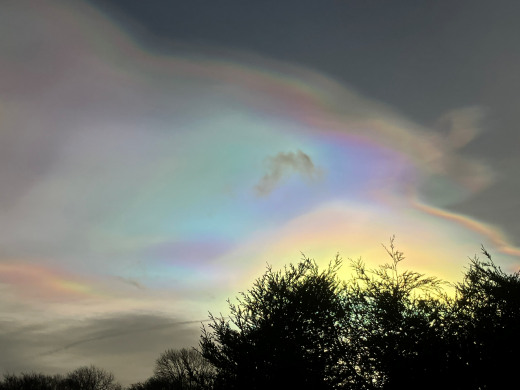
PSCs SPILL OUT OF THE ARCTIC: Normally, polar stratospheric clouds (PSCs) are confined inside the Arctic Circle. Only above the poles can the stratosphere become cold enough to create these rare clouds. However, during this week's outbreak of PSCs, the clouds have spilled out of the Arctic to places they are seldom seen. This morning, Stu Nock photographed them over Manchester, UK:

manchester_strip.jpg


"Clouds cleared shortly after sunrise to reveal these beautiful PSCs at latitude +53N," says Nock. That's more than 13 degrees below the Arctic Circle.

Widely considered to be the most beautiful clouds on Earth, polar stratospheric clouds are a sign of extreme cold. PSCs form when the temperature in the Arctic stratosphere drops to a staggeringly-low -85 C. Then, and only then, can widely-spaced water molecules in the dry stratosphere coalesce into tiny ice crystals. High-altitude sunlight shining through the crystals creates intense iridescent colors that rival auroras.

Something new: For the rest of this northern winter season, we will publish daily predictions of temperatures in the Arctic stratosphere. This will help sky watchers know when to look for these rare clouds. The predictions are right here.

more images: from Shaun Greenwell of Newcastle upon Tyne, UK; from Alan C Tough of Elgin, Moray, Scotland; from Lesley Robertson of Black Isle, Scotland; from Sheri Karl of Aberdeen, Scotland; from Jamie McBean of Herne Bay, Kent, UK; from Tomas of Perthshire, Scotland; from Gordon Ward of Hightown Castleford UK; from Les Brooks of East Shore Village, County Durham, UK; from Michael Horne of Luncarty, Scotland; from Steve Brown of North Yorkshire, UK

 
Fucking ticks.

 
1703218057581
 
Back
Top