Random Picture thread

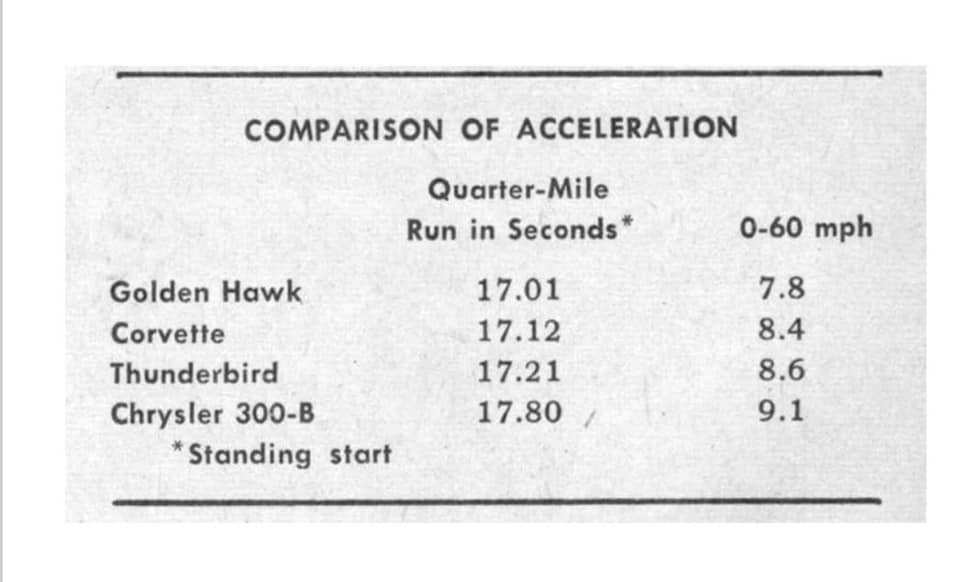
The Chrysler is heaviest. Likely the only automatic in that list.

MPH/trap speed might tell more. At that time was the tech not widely enough available to give that? How were they determining when 60MPH was reached?

I know Sports Car Illustrated (renamed Car and Driver) used a "Tapley meter" up to 1964-65-ish. I'd have to check how they worked.
 
1.jpg
 
  • Like
Reactions: VTR
The Chrysler is heaviest. Likely the only automatic in that list.

MPH/trap speed might tell more. At that time was the tech not widely enough available to give that? How were they determining when 60MPH was reached?

I know Sports Car Illustrated (renamed Car and Driver) used a "Tapley meter" up to 1964-65-ish. I'd have to check how they worked.
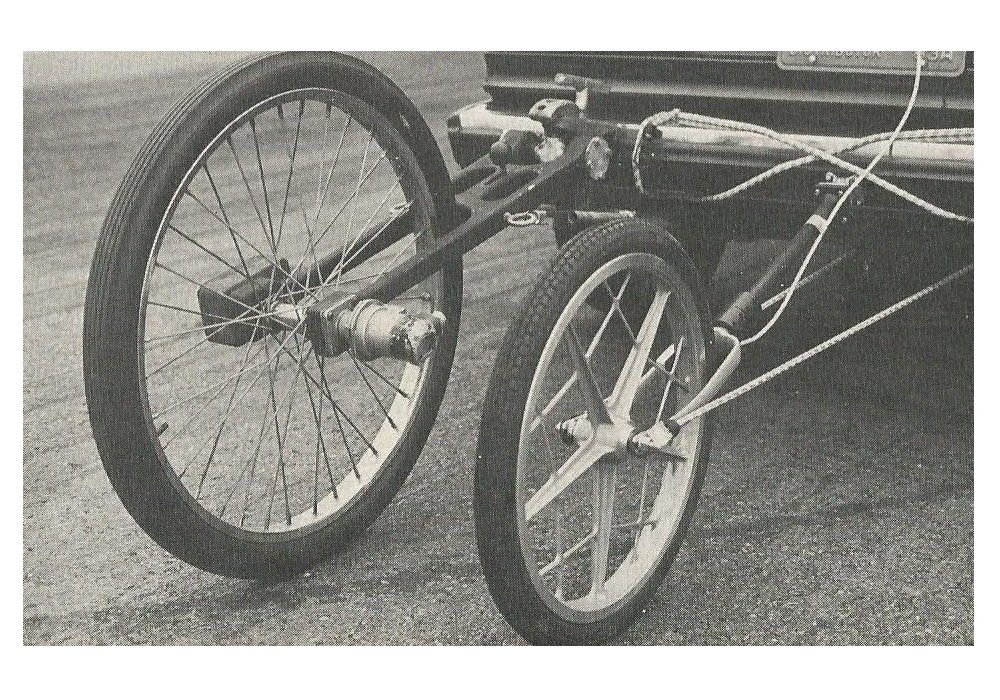
Was that the 5th wheel clamped to the bumper?
 
The race toward the 16's. ;)

1957's fastest, or 4 of, at least

Missing are:
Rambler Rebel using the new AMC 327 (not a Packard engine as a year or two prior)
Plymouth Fury is believed to be in there.

And of course the Tbird could be had with a supercharger added, but that was dealer installed/aftermarket.

Packardbaker Golden Hawk in this year (1957) had the Studebaker 289 with Paxton as true OE.

Motortrend test.

I never realized they were that slow. Then again, I guess I never sat down and thought about it either.
 
Was that the 5th wheel clamped to the bumper?
It appears it uses a pendulum in a housing to determine G forces mechanically. A light ratcheting action of the mechanism can capture peak deceleration.


Apparently in some jurisdictions they were- and their electronic descendent are- used in... brake inspections...?
For example parts of the UK and other commonwealth countries where MOT are done, it is standard practice to do a G-test.

JFC I just read the promo from a company still providing them.
even automatically uploads MOT test results to the MoT Testing Service (MTS). Aside from the mandatory scheduled testing, there is also a perfect opportunity to create a profit centre, particularly for those repair shops that do not have access to a roller brake tester....to increase their revenue through the provision of a ‘pre-overhaul’ and ‘post-overhaul’ brake test report.
Only in a country gone mad do you need to upload your peak brake g-force to Big Brother annually.
It gets right under my skin as well because I've dealt with braindead fks for a living that expected their brakes to feel different after a turn and set of pads. or new rotors and pads. In 99.9999% of cases you do not feel your brakes grabbier. If you do, then likely someone fucked up.

Anyway *DEEP Breath* where was I ??

-

-> This goes into Tapley meters in car road tests, (real ones not braindead limey bureaucracy) :

I remember in magazines from pre 1965-ish (I was gifted such a collection in the mid-late 1980's) the road test data printed a small box of statistics, using it for acceleration, and measured in... lb/ton. (??)
Maximum scale was 0.3g. That link goes into the math of that.
Basically 16.5 @ 108mph was your purely theoretical results of a steady 0.3g
Of course that wouldn't be the case- you'd pin the meter and once into high gear with some aero drag acceleration would drop back into the measurable range again.


The next generation testing after that was still dark ages:
 
It appears it uses a pendulum in a housing to determine G forces mechanically. A light ratcheting action of the mechanism can capture peak deceleration.


Apparently in some jurisdictions they were- and their electronic descendent are- used in... brake inspections...?
For example parts of the UK and other commonwealth countries where MOT are done, it is standard practice to do a G-test.

JFC I just read the promo from a company still providing them.

Only in a country gone mad do you need to upload your peak brake g-force to Big Brother annually.
It gets right under my skin as well because I've dealt with braindead fks for a living that expected their brakes to feel different after a turn and set of pads. or new rotors and pads. In 99.9999% of cases you do not feel your brakes grabbier. If you do, then likely someone fucked up.

Anyway *DEEP Breath* where was I ??

-

-> This goes into Tapley meters in car road tests, (real ones not braindead limey bureaucracy) :

I remember in magazines from pre 1965-ish (I was gifted such a collection in the mid-late 1980's) the road test data printed a small box of statistics, using it for acceleration, and measured in... lb/ton. (??)
Maximum scale was 0.3g. That link goes into the math of that.
Basically 16.5 @ 108mph was your purely theoretical results of a steady 0.3g
Of course that wouldn't be the case- you'd pin the meter and once into high gear with some aero drag acceleration would drop back into the measurable range again.


The next generation testing after that was still dark ages:

BTW an article linked there touches on a measurement unit of acceleration that is interesting, and after all these years "new" to me: 1G is a rate of gain of ~ 22 MPH/sec.

Current top Corvette having set a street production record of just 2.7 zero to 60 time averaged 1G over the entire 0-60 run.

At one point, in I guess the 1950's? - at least one of the magazines discussed that drag racers were approaching the limit, claiming 1G could never be exceeded. I imagine at the time it was already being done so for most of a second off the line.
 
Back
Top