You can believe this or not, your choice. But if you don't do a bit of research first, you're an idiot and part of the problem.
Always 2 sides. This first paper describes situation in India.
“When the first pandemic struck in 1918, our knowledge on influenza was a clean slate, in fact, some believed that the pandemic was caused by a bacteria -
Bacillus influenza3. There were no vaccines, no antivirals and no antibiotics to treat the superadded infections.”

www.ncbi.nlm.nih.gov
”The isolation of influenza virus 80 years ago in 1933 very quickly led to the development of the first generation of live-attenuated vaccines.”
The isolation of influenza virus 80 years ago in 1933 very quickly led to the development of the first generation of live-attenuated vaccines. The first inactivated influenza vaccine was monovalent...
www.tandfonline.com
”Pfeiffer’s reputation was solidified when he isolated bacteria from influenza patients during the pandemic of 1889-90. He now believed that these bacteria, known as Pfeiffer’s bacillus or
Bacillus influenza,were the cause of the 1918 influenza and publicly proclaimed this to the medical community. Sadly, this proclamation would misguide the world’s leading scientists for over a decade.”
…
”It would not be until 1928, that a Rockefeller Institute pathologist, Richard Shope, would go back to his native Iowa to investigate a new outbreak of swine influenza. Pig farmers in Iowa had reported two outbreaks – one in 1918 and one in 1928 – of a highly contagious, influenza like disease among their pigs. Shope and his mentor Paul Lewis took mucus and lung samples from the infected pigs and attempted to isolate the disease-causing agent. They quickly isolated a bacteria that looked exactly like Pfeiffer’s human bacteria (and was thus called
B. influenzae suis), but when they injected the bacteria into pigs, it caused no disease.
Shope then filtered the samples to block out any bacteria, and, like Olitsky and Gates, found that the filtrate – which could only contain a virus – contained the infectious agent. Shope’s filtrate caused a highly contagious, influenza-like disease in pigs—albeit a milder one than seen in naturally-infected pigs. Mixing the filtrate with the bacterium reproduced the severe disease. He concluded—correctly—that the filterable agent caused the infection, which then facilitated secondary infection with the bacterium. Shope published his results in a series of papers in 1931 . Using Shope’s technique, UK researchers isolated the virus from humans in 1933 laying to rest any doubts about the nature of the pathogen for the 1918. In the end, it took a full 15 years after the deadly epidemic ravaged the world to realize it was a virus and not a bacteria.”
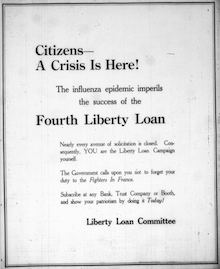
“It’s like déjà vu all over again.”-Yogi Berra BACKDROP TO THE 1918 INFLUENZA By 1917 the war in Europe had been underway for three years and death was no stranger to the continen…

candidcurious.com
edit: also this.
“The first of the viral vaccines to result from these advances was for
yellow fever, developed by the microbiologist
Max Theiler in the late 1930s. About 1945 the first relatively effective vaccine was produced for
influenza; in 1954 American physician
Jonas Salk introduced a
vaccine for
polio; and in 1960 an oral
polio vaccine, developed by virologist
Albert Sabin, came into wide use.”
History of medicine - Immunization, Viral Diseases, Vaccines: With the exception of smallpox, it was not until well into the 20th century that efficient viral vaccines became available. In fact, it was not until the 1930s that much began to be known about viruses. The two developments that...

www.britannica.com