Damn. I missed that for a day. Maybe PB as a whole did.

1 / 10

Vigilante Parts
2 / 10

Dynamic
3 / 10

Pacific
4 / 10

Madcap
5 / 10

Bigtime Automotive
6 / 10

DHR Motorsports
7 / 10

Probe
8 / 10

ATD
9 / 10

Jesel
10 / 10

Precision

You are using an out of date browser. It may not display this or other websites correctly.
You should upgrade or use an alternative browser.
Engine Pictures
- Thread starter James Joyce
- Start date


Yoyodyne
Open the pod bay door, HAL
62-65 Kaiser Jeep OHC 6

Yoyodyne
Open the pod bay door, HAL


jds59
Grumpy Old Bastard
- Joined
- Mar 21, 2021
- Messages
- 9,793
- Reaction score
- 64,323
- Points
- 153
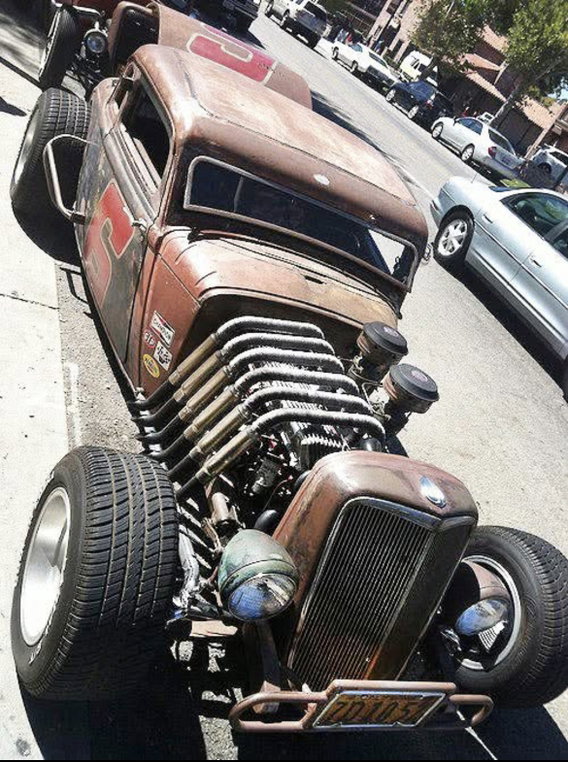
They were a rather odd design that for some reason I find interesting since they powered some of the Willy's wagons near the end of their production run before being replaced by the more modern Wagoneer. These engines used the same cam lobe for both the intake and exhaust valves. I'd imagine that design shortcut alone left a lot of power on the table. After Jeep was done with them they went to South America where they were developed quite a bit further. The info below liberated from wiki:62-65 Kaiser Jeep OHC 6
"The engine name was changed to "Torino" to match the car in 1973. It also received a major block and crankshaft refinement that year — seven main bearings instead of the original four. Industrias Kaiser Argentina was eventually bought out by Renault, and in 1975, the "IKA" name was dropped and it became "Renault Argentina". The Torino, Jeeps, AMC cars, as well as the Tornado engine itself, continued to receive upgrades over the years.
Argentinian Tornado engines raised output from 155 HP to 215 HP (street versions) and 250 HP to 350 HP (Racing versions). This was achieved by a new cylinder head, which improved the intake and exhaust ducts. Also adopted a new camshaft, a new exhaust manifold of a 3-1/3-1 type, two 2-inch diameter exhaust pipes, and 3 carburetors Weber DCOE 45-45.
The Torino and the Jeep Tornado engine continued production through 1982. It was marketed as the "Tornado Jet", and later as the "Tornado Interceptor", in AMC design automobiles built by IKA.[12] From 1976 to 1982, they were the only non-Renault–designed cars and engines built by the French company.
A couple things I know of them:
- OE in M715's, and caused a lot of problems in that application. Cam wear was the culprit. Twice the wear on each cam lobe might be an over simplification of the issue, but it couldn't have helped.
- I would say having a single pattern cam with a LSA set by the rocker geometry isn't the end of the world, probably cost only several percent horsepower, if that.
- they are one of the few engines with deliberately small ports of a decent shape to try to get some low to mid power that way. Didn't do much. Energy is M x V squared, so where a RO7 NASCAR motor makes significantly more power with the port sized right, at 1/3 the RPM you have ~10% the ram charging energy. (10K squared vs 3K squared is 9.X%)
- There was an SAE paper written about it. German or French guy led the small engineering team, IIRC.
- The OE Holley one barrel was the largest venturi and/or throttle plate 1bbl ever produced for a mainstream domestic vehicle.
- Triumph used a similar rocker system in the late 70's. Dolomite - and maybe the later 6cyl used by Rover. Not certain on that one. Spencer "Spen" King was the engineer on that. Brilliant guy but occasionally did things oddly just for the sake of oddly. Look at a Rover 2000TC front spindle/spring arrangement- his work.
Last edited:

James Joyce
Platinum Member

99PanozAIV
Platinum Member
- Joined
- Mar 10, 2020
- Messages
- 16,741
- Reaction score
- 34,909
- Points
- 153
My brother is down in Virginia visiting some of our family. He sent me this pic of an engine my neice’s husband is finishing up. He used to have a shop but now works someplace that pays regularly. I didn’t know he was still doing such stuff but my brother said it’s his last one, doing it for a friend and it’s supposed to be around 1,800 HP supposedly for a road racing car.
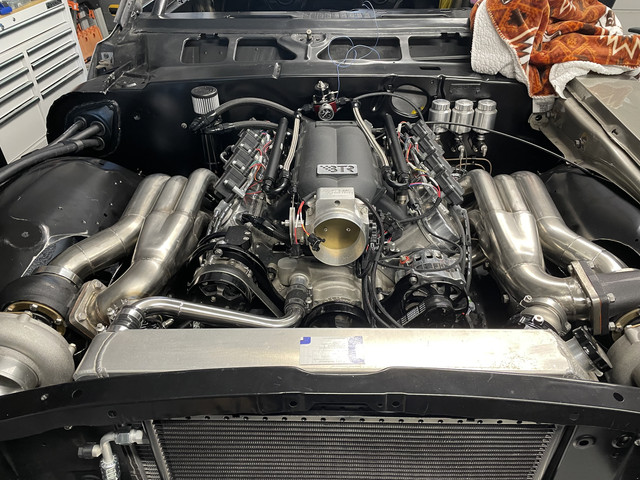
Road race... lolMy brother is down in Virginia visiting some of our family. He sent me this pic of an engine my neice’s husband is finishing up. He used to have a shop but now works someplace that pays regularly. I didn’t know he was still doing such stuff but my brother said it’s his last one, doing it for a friend and it’s supposed to be around 1,800 HP supposedly for a road racing car.
Steve Morris has just done a deal to put one of his "big block" engines (naturally aspirated, 950hp) in a drift car- it's the top or 2nd video on his channel. Interesting.

MarkJ
Silver Member
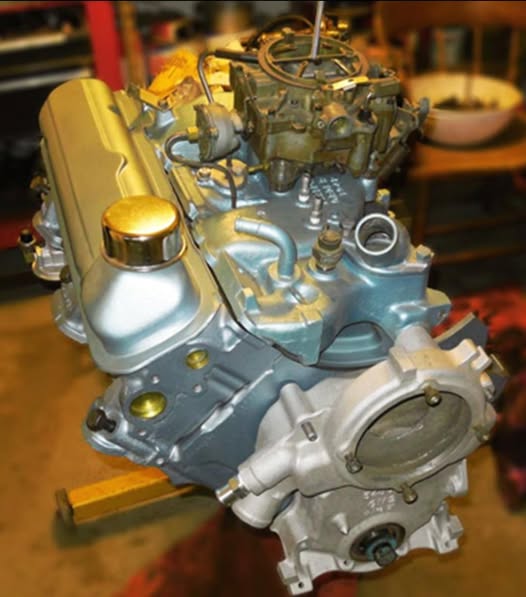
I hope to be installing this during October.
MarkJ
Silver Member
It is more period correct for my old prostocker.dragster, i'm guessing?

Mike Beck
Gold Member
- Joined
- Jul 20, 2021
- Messages
- 9,639
- Reaction score
- 19,477
- Points
- 153
I don't know if you want to do this, but those covers and intake look very bland. Going to hydrodip them or powder coat them? If you are going for the "original" look then I understand if you leave them alone.
MarkJ
Silver Member
I agree, they could look better but yes, I am trying to get close to the engine Glidden ran in the car. This is the car at the 1988 Gator Nationals.I don't know if you want to do this, but those covers and intake look very bland. Going to hydrodip them or powder coat them? If you are going for the "original" look then I understand if you leave them alone.
Last edited:
The carb for that engine is the only OE Holley I know of which has 4 x .026" emulsion bleeds in the main well. In about 1970 I tried one of those Jeep metering blocks on a 3310 780cfm on a 454 and it fouled plugs in about 10 miles. That was one of the first (for me) experiments with modifying air bleeds in a Holley and made me very aware that a larger main air bleed and more emulsion air bleeds makes the small throttle opening and low power A/F richer, not leaner, as urban lore still propounds to this day, thanks to some of the more vocal ignoramistic carb mavens who got themselves published in magazines and started the misinformation campaign from carb hell that just won't die.62-65 Kaiser Jeep OHC 6
The intake manifold is integral with the head and divided so each carb venturi only feeds 3 cylinders, 123 on one carb throat and 456 on the other. The 4 E-bleed deal was used because with fewer cylinders per venturi the air flow pulsing is more pronounced because there is 270 degrees between each intake suction pulse and an engine like that has only about 180 (@ .050") degrees intake duration, so the airflow literally stops between flow pulses through the venturi and has to restart flow for the next intake event.
With more emulsion bleed air the fuel in the carb passages, main well and nozzle, is less viscous and lighter (less dense due to entrained tiny bubbles) so it responds to the venturi vacuum signal more readily. This is why a lot of "new and improved, more modern ~ custom ~ " carbs produced in the last 20-30 years, which have more and larger emulsion bleeds and main air bleeds, start the main nozzle flow at smaller throttle opening, which causes the main to overlap the idle/transition too much, so the very small throttle opening range becomes too rich, resulting in level road burbling~misfiring and trailer hitching, fooling people (and oxygen sensors) to think it is too lean, .... aaarrrgh
The other phenomenon involved with emulsion bleeds is when air enters the well from E-bleeds below float level, because the air bubbles have the effect of lifting fuel up the well, this increases the gravity head the amount from float level down to the hole(s) admitting bleed air, or about 1/2 inch from float level to the lower bleed in the traditional 4150-4160 Holley metering blocks. Does raising the float level 1/2 inch make it rich?
When all 6 (or 8) cylinders are joined with a common plenum the result is more constant air flow because intake strokes overlap every 120 degrees (or 90 degrees with 8 cylinders) so the flow velocity will pulsate but not actually stop or reverse.
Last edited:

ratssass
Ratssass©
- Joined
- Mar 7, 2020
- Messages
- 26,392
- Reaction score
- 44,946
- Points
- 153
lol....wrong Mark. My apologies. Good luck, friend!It is more period correct for my old prostocker.

Yoyodyne
Open the pod bay door, HAL

1.3K reactions · 14 comments | 1905 200hp Darracq land speed record car with a 26 litre V8 🏁 One of the first ever V8’s ever made, it has 1000ft.lbs of torque 🔥 🎥 @leslestontoday #prewarcar #vintagecar #classiccar | Jonny's Garage
1905 200hp Darracq land speed record car with a 26 litre V8 🏁 One of the first ever V8’s ever made, it has 1000ft.lbs of torque 🔥 🎥 @leslestontoday #prewarcar #vintagecar #classiccar.
 www.facebook.com